Cats · Product picks
The Best Cat Scratching Posts
The SmartCat Ultimate Scratching Post is our top pick. See five researched scratchers for small spaces, big cats and cardboard fans, plus how to choose.
We may earn a commission if you buy through links on this page. It never decides what we pick.How that works
The best scratching post is tall, sturdy and covered in a material your cat likes. For most adult cats, the SmartCat Ultimate Scratching Post is a strong pick. Below are five scratchers for different homes and cats, plus tips on size, materials and placement.
Our picks at a glance
- Best overall: SmartCat Ultimate Scratching Post
- Best for small spaces: SmartCat Bootsie’s Combination Scratcher
- Best for cardboard fans: Catit PIXI Scratcher
- Best scratcher and hideaway: Catit Vesper Minou
- Best for large cats: Catit Vesper High Base Giant
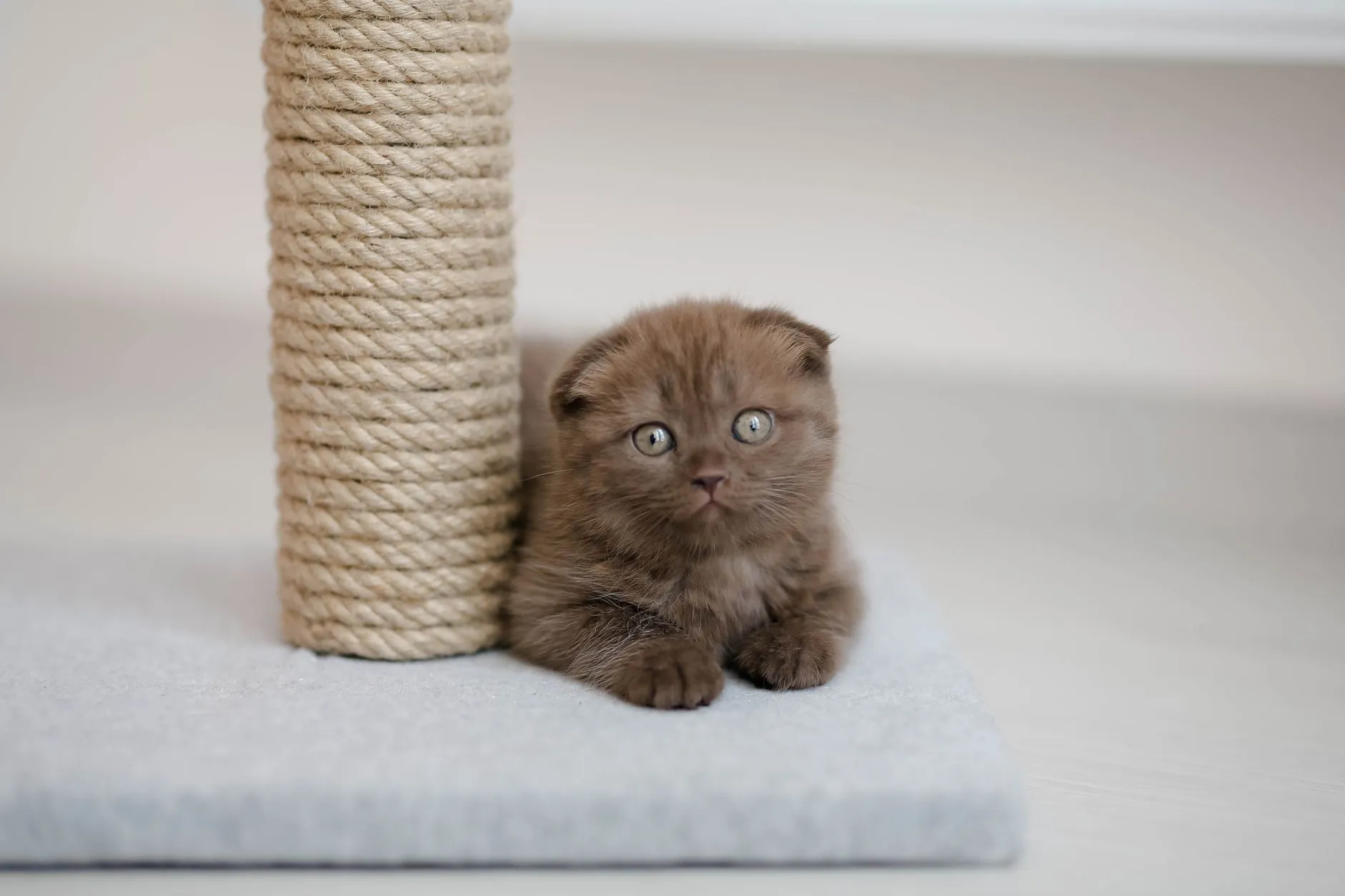
The best cat scratching posts
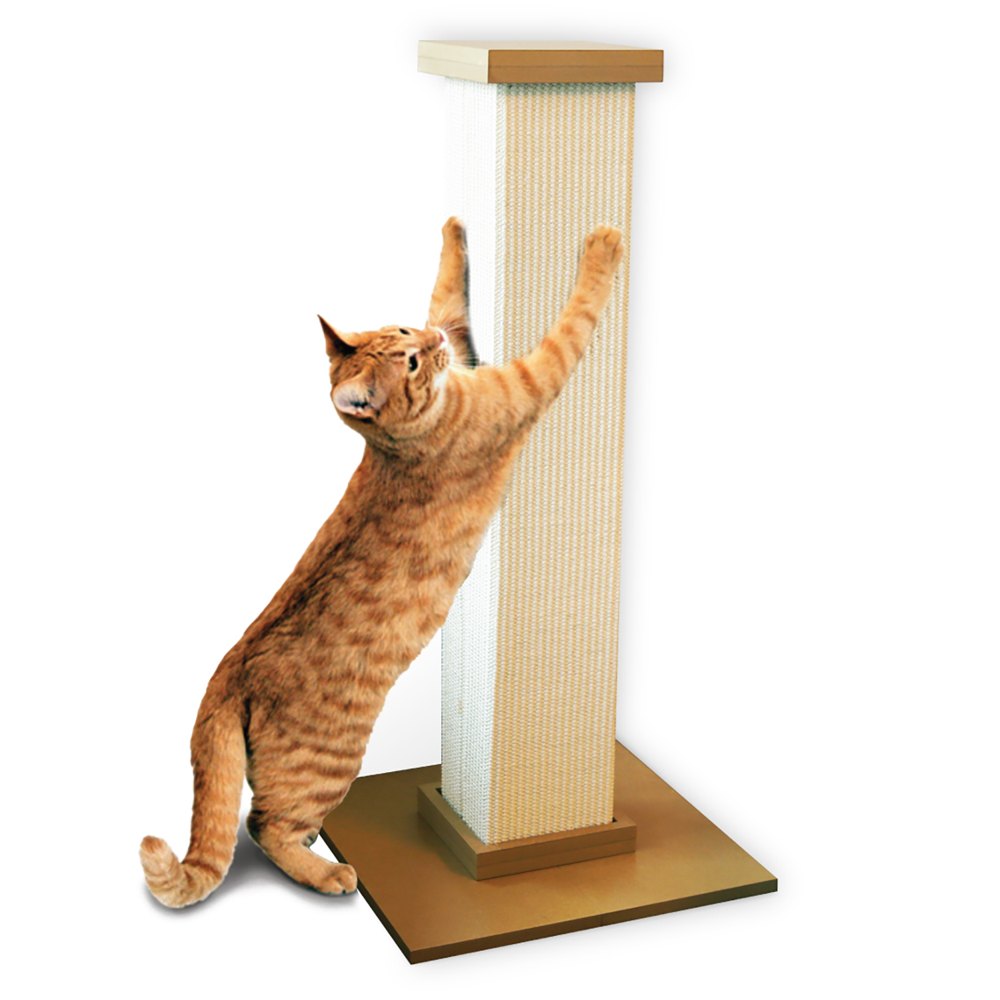 Best overallPhoto: Pioneer Pet
Cat scratching posts
SmartCat Ultimate Scratching Post
Best for: Cats who like a full-height stretch
The maker says this post is 32 inches tall so cats can stretch fully, with a 16 by 16 inch base that stops tipping and wobbling. It is covered in woven sisal. Skip it if floor space is tight, since the base is large, and plan on some assembly.
- Pro: 32-inch post lets a cat stretch out fully
- Pro: 16 by 16 inch base to stop tipping and wobbling
- Pro: Woven sisal cover
- Con: Needs some assembly
- Con: Takes up floor space
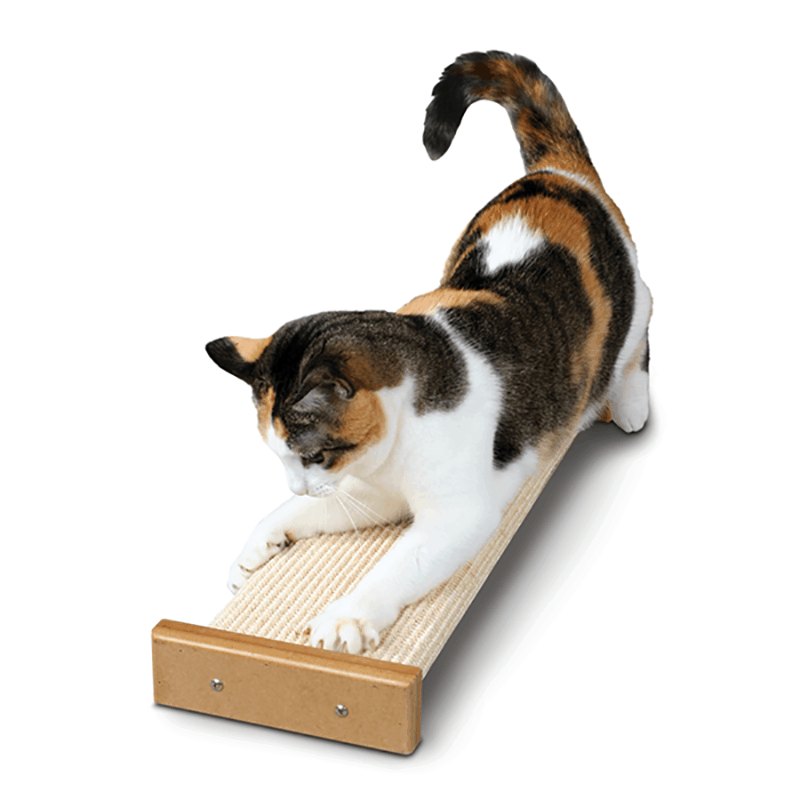 Best for small spacesPhoto: Pioneer Pet
Cat scratching posts
SmartCat Bootsie's Combination Scratcher
Best for: Small homes and wall-mount fans
This slim scratcher is 24 inches long and made of woven sisal. You can mount it on a wall or set it on the floor, and it has rubber feet to keep it from slipping. It suits small homes. Skip it if you want a post that is tall enough for a full stretch, or if you can’t drill into your walls.
- Pro: Mounts on a wall or sits on the floor
- Pro: Woven sisal, which the maker says is more durable than wound sisal
- Pro: Rubber feet help stop slipping
- Con: Only 24 inches long
- Con: Wall mounting means drilling
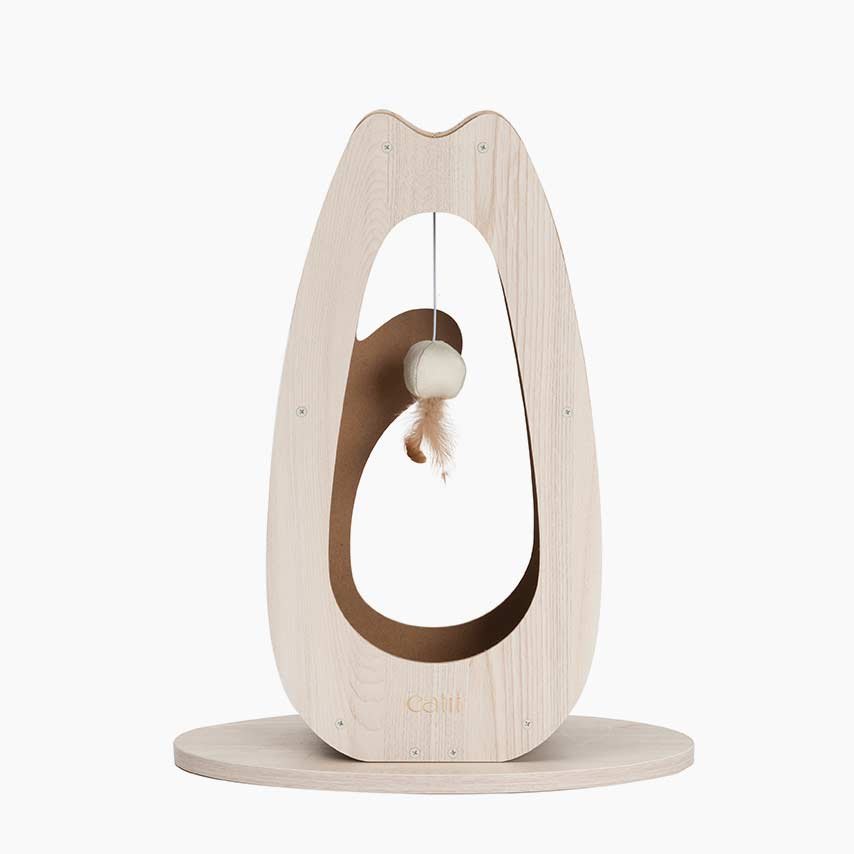 Best for cardboard fansPhoto: Catit
Cat scratching posts
Catit PIXI Scratcher
Best for: Cats who prefer cardboard
The PIXI has a wood frame with cardboard scratching surfaces you can replace when they wear out. It comes in tall, wide and cat-tail designs and includes a feathered toy on elastic. It’s a good fit for cats who like cardboard. Skip it if your cat shreds through cardboard fast and you don’t want to buy refills.
- Pro: Replaceable cardboard scratching surfaces
- Pro: Comes in tall, wide and cat-tail designs
- Pro: Includes a feathered ball toy on elastic
- Con: Cardboard wears out and needs refills
- Con: Shorter than a full-height post
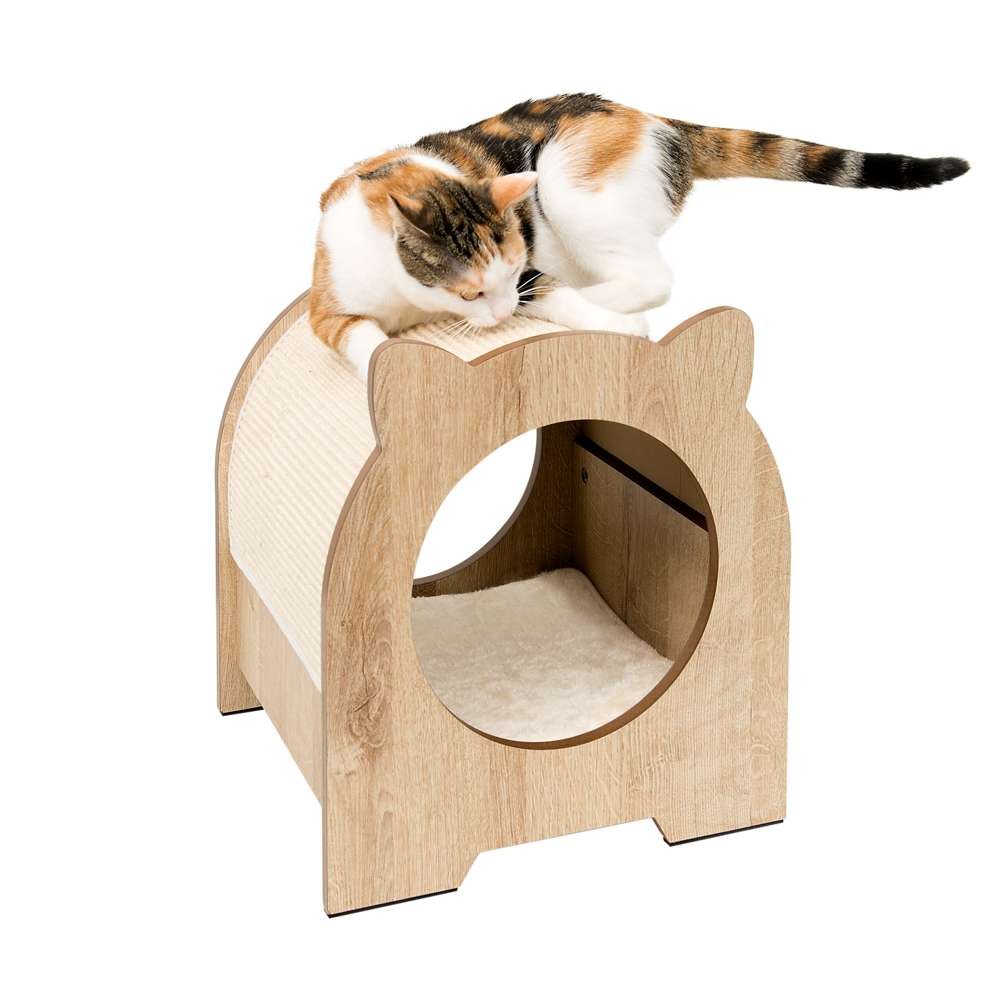 Best scratcher and hideawayPhoto: Catit
Cat scratching posts
Catit Vesper Minou
Best for: Cats who want to scratch and nap in one spot
This compact, cat-shaped bench has a replaceable sisal mat on the outside and a hideaway inside with a washable memory-foam cushion. It gives your cat a place to scratch and nap. At about 14 by 14 by 16 inches, it’s small. Skip it if you need a tall post or have a large cat.
- Pro: Replaceable sisal mat on the outside
- Pro: Removable, washable memory-foam cushion
- Pro: Compact size of about 14 by 14 by 16 inches
- Con: Too small for a full-height stretch
- Con: Might be tight for large cats
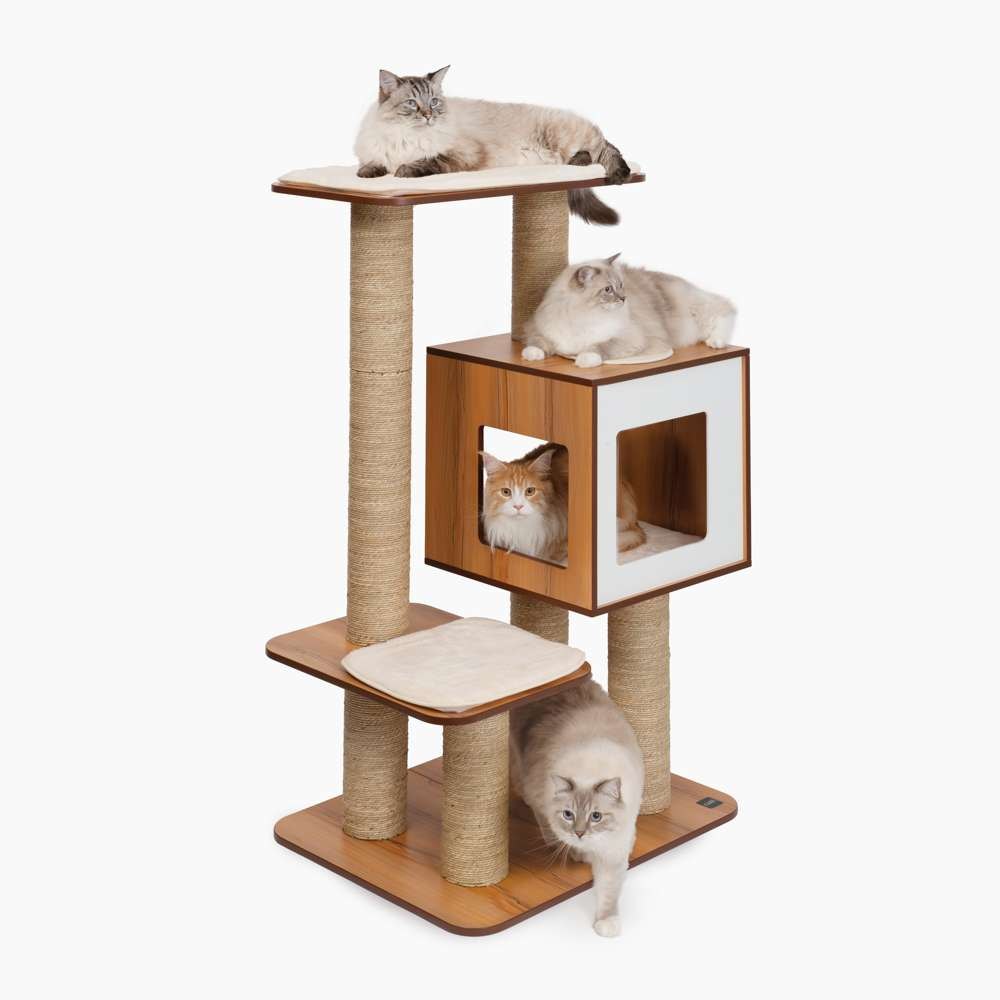 Best for large catsPhoto: Catit
Cat scratching posts
Catit Vesper High Base Giant
Best for: Large breeds and multi-cat homes
Catit built this four-level tree for large breeds or homes with several cats. It has extra-thick seagrass posts, a den with three entrances and wide platforms. The posts and cushions can be replaced. Skip it if you have a small room or just want a simple post.
- Pro: Extra-thick seagrass scratching posts
- Pro: Large den with three entrances
- Pro: Posts and cushions can be replaced with spare parts
- Con: Large, so it needs plenty of room
- Con: Needs assembly with an Allen wrench
How to choose a cat scratching post
Pick a tall, sturdy post
The ASPCA says cats want a post that won’t shift or collapse, and one tall enough for a full stretch. A wobbly post may put your cat off. A wide, heavy base helps, which is why the maker of the SmartCat Ultimate stresses its base size.
Match the material to your cat
The ASPCA suggests offering several materials, including cardboard, carpet, wood, sisal and upholstery. It also notes that some cats prefer vertical surfaces and others prefer horizontal ones. If you’re not sure what your cat likes, watch what they scratch now and pick something similar. Pioneer Pet says sisal is strong and rough, and says carpet can snag claws.
Think about size and the number of cats
Large cats and homes with more than one cat need more room and a more stable build. A compact bench or cardboard scratcher works for small spaces, but it may not give a big cat a full stretch.
Look for replaceable parts
Scratching surfaces wear out. Catit sells replacement parts for the Vesper line and replacement cardboard for the PIXI, so you can refresh the scratcher instead of buying a new one.
Put it where your cat will use it
The ASPCA says to place posts near furniture your cat already targets, or where your cat likes to climb. Pioneer Pet suggests putting a post where your cat spends time, rubbing on catnip to get your cat interested, and praising them when they use it.
Safety tips
- Check stability first. Put the post on a flat floor and make sure it doesn’t rock when your cat pulls on it. Follow the assembly steps and tighten all screws.
- Replace worn parts. If a scratching surface is shredded or loose, swap it for a new one using the maker’s replacement parts.
- Don’t declaw. The ASPCA strongly opposes declawing as a way to fix scratching.
- Talk to your vet if your cat suddenly scratches much more or less than usual, or if a claw looks injured.
Common questions
How tall should a cat scratching post be?
The ASPCA says a post should be tall enough for your cat to stretch out fully. It should also be sturdy enough that it does not shift or fall when your cat pulls on it.
What material is best for a scratching post?
The ASPCA suggests offering a mix of materials, such as cardboard, carpet, wood, sisal and upholstery, because cats have different tastes. Sisal is a strong, rough rope fiber that many posts use.
Should I declaw my cat to protect my furniture?
No. The ASPCA says declawing should not be used as a fix for scratching problems. A good scratching post placed in the right spot is a better first step.
Where should I put a scratching post?
Put it near the furniture your cat already scratches, or where your cat likes to rest or climb. Pioneer Pet also suggests using catnip and praise to help your cat try it.