Dogs · Product picks
The Best Dog Gates for Your Home
The Cardinal Gates PG26 is our top pick for most homes. See five researched dog gates and how to choose the right type, height and fit.
We may earn a commission if you buy through links on this page. It never decides what we pick.How that works
A good dog gate keeps your dog out of the kitchen, off the stairs, or in a safe room while you are busy. For most homes, the Cardinal Gates PG26 is our top pick. It is a steel, no-drilling gate that fits many opening widths.
Our picks at a glance
- Best overall: Cardinal Gates PG26 Pressure Mounted Gate
- Best wall-mounted gate: Cardinal Gates Duragate Safety Gate (Model MG-25)
- Best tall walk-through gate: North States MyPet Tall Happy Tails Walk Thru Pet Gate
- Best for wood style: Richell Tall One-Touch Gate II
- Best freestanding gate: Richell Convertible Elite Pet Gate/Crate 6 Panel

The best dog gates
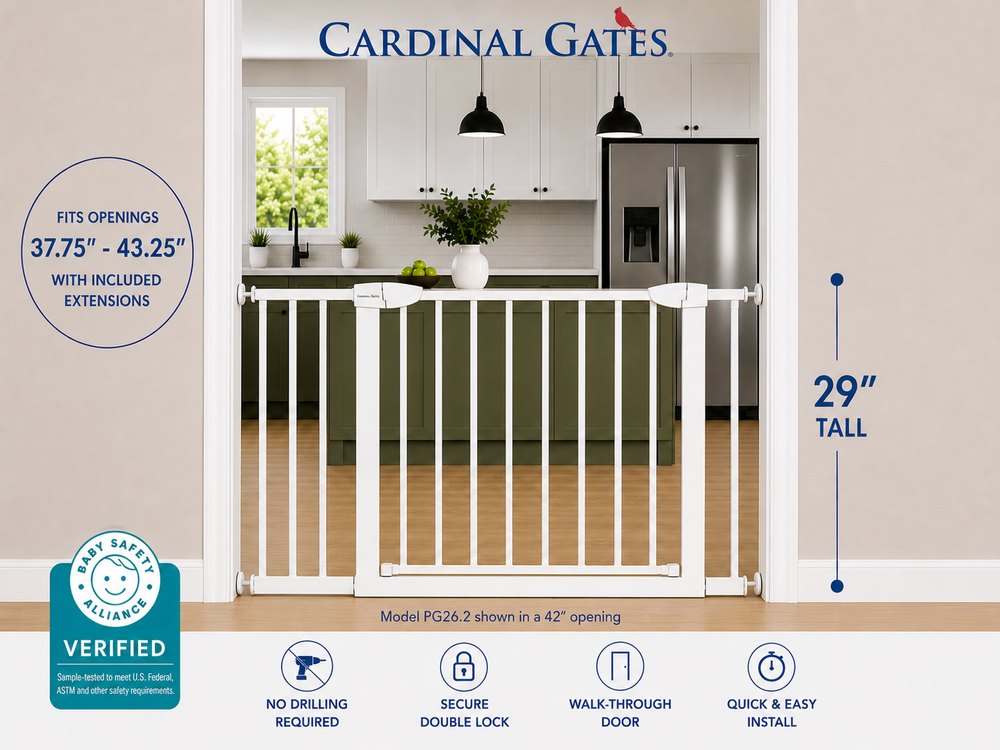 Best overallPhoto: Cardinal Gates
Dog gates
Cardinal Gates PG26 Pressure Mounted Gate
Best for: Doorways and hallways, including wider openings
The PG26 is made of steel and holds in place with twist-to-tighten pressure feet, so you don’t need to drill. Cardinal sells it in five width ranges, from 29.5 to 57 inches, and the right extensions come with it. It is 29.5 inches tall, so skip it for a dog that can jump that high. Also skip it for the top of stairs.
- Pro: Steel construction with a powder-coated finish
- Pro: Five width ranges from 29.5 to 57 inches, with extensions included
- Pro: One-hand release and a double-locking latch
- Con: Pressure mount, so not for the top of stairs
- Con: Only 29.5 inches tall, which a big jumper may clear
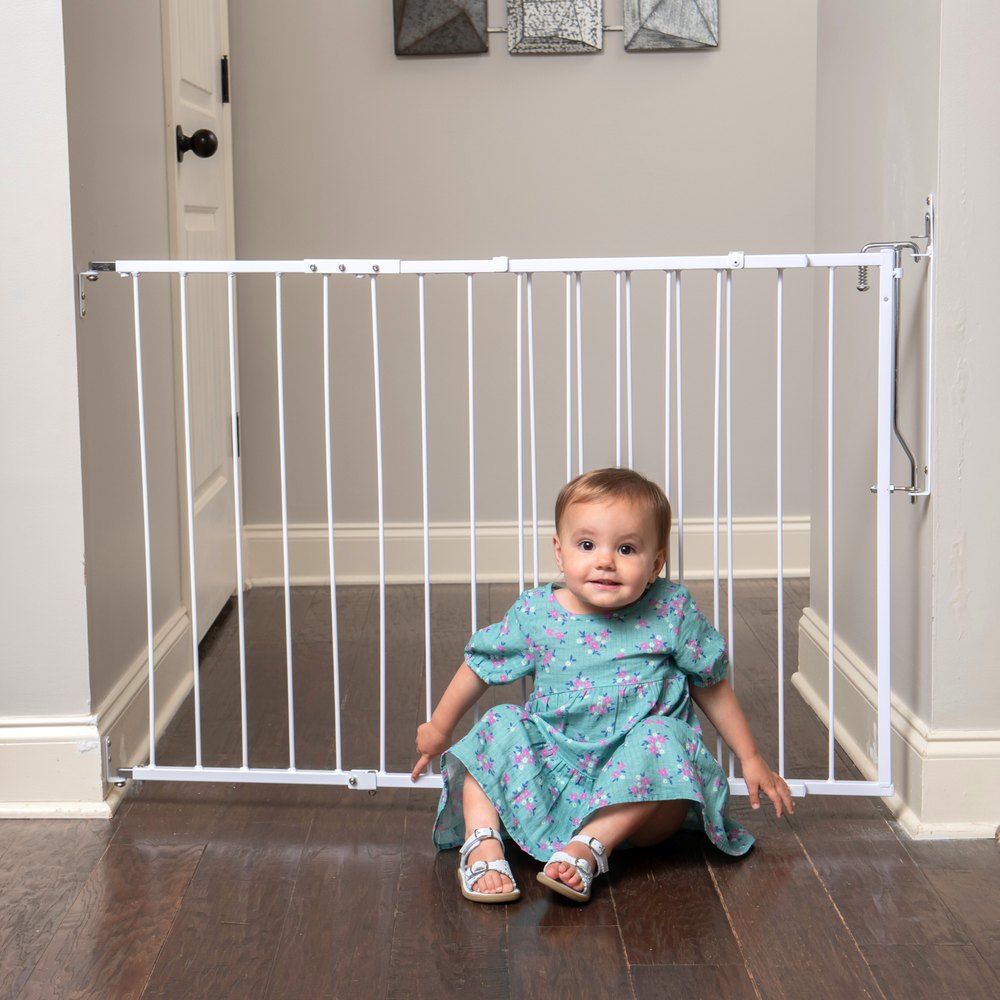 Best wall-mounted gatePhoto: Cardinal Gates
Dog gates
Cardinal Gates Duragate Safety Gate (Model MG-25)
Best for: Homes that want a sturdier, fixed gate
The Duragate has an all-steel frame and fits openings from 26.5 to 41.5 inches. Cardinal lists it as hardware-mounted and says it can be mounted at any angle. The gate opens both ways, and the page doesn’t say it is approved for the top of stairs. Ask Cardinal before using it there. Walls without a stud need a separate anchor kit.
- Pro: All-steel frame with a powder-coated finish
- Pro: Fits openings from 26.5 to 41.5 inches
- Pro: Optional height extensions made for pet use
- Con: Opens both ways, so check with the maker before using at stairs
- Con: Drywall without a stud needs a separate anchor kit
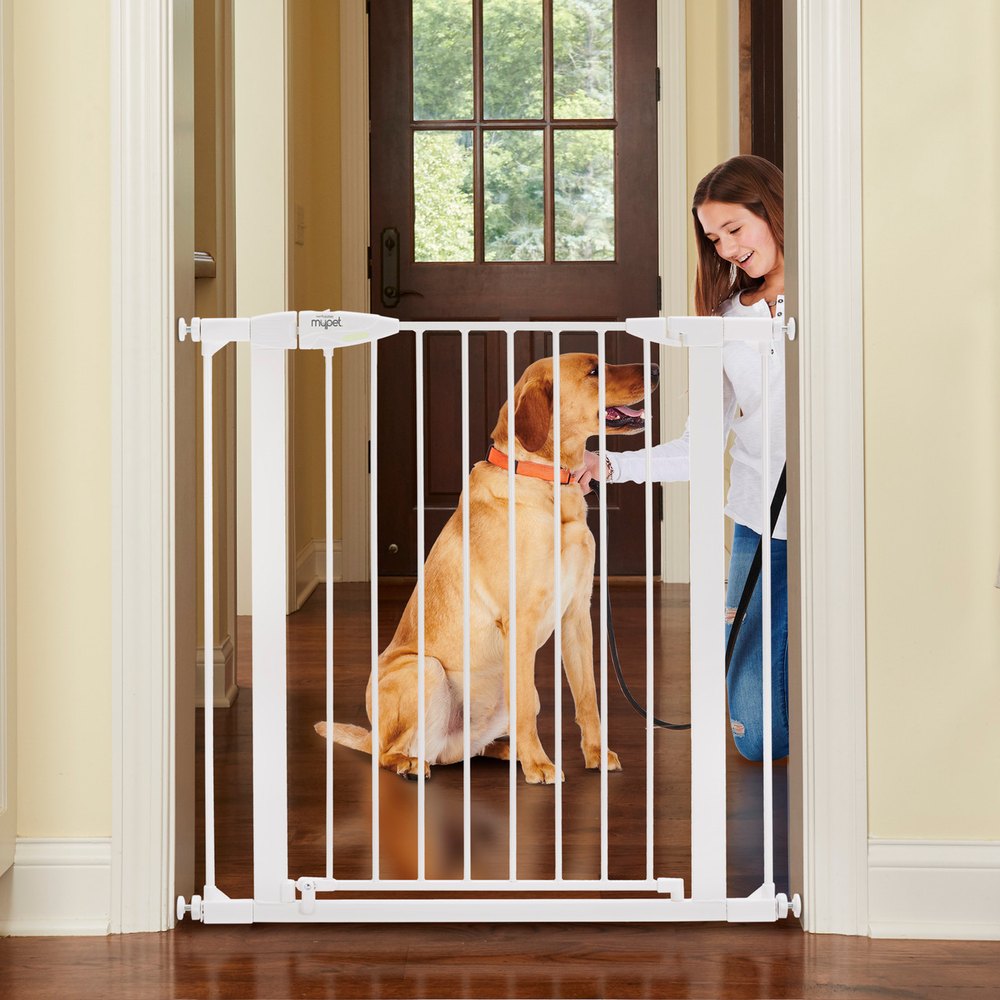 Best tall walk-through gatePhoto: North States
Dog gates
North States MyPet Tall Happy Tails Walk Thru Pet Gate
Best for: Medium and large dogs, and people who walk through often
This steel gate is 36 inches tall and fits openings 29.75 to 37.5 inches wide. The door swings shut behind you, which helps if you walk through often. North States says it is pressure-mount only and should not be used at the top of a stairway. It suits larger dogs, but the width range is narrow.
- Pro: 36 inches tall, a hard-to-climb barrier
- Pro: Door swings shut behind you
- Pro: Two extensions included
- Con: Pressure mount only, never for the top of stairs
- Con: Fits a fairly narrow range of openings
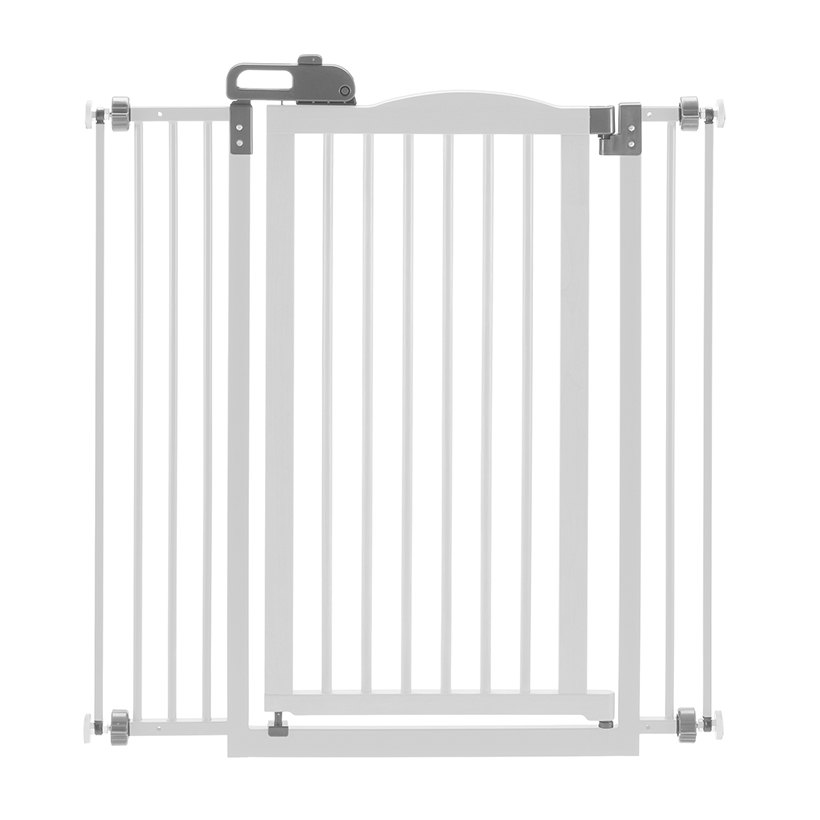 Best for wood stylePhoto: Richell
Dog gates
Richell Tall One-Touch Gate II
Best for: Living areas where looks matter
This gate pairs a natural wood door with a steel frame, so it blends into a living space. It stands 38.4 inches tall and has a latch you can work with one hand. Richell recommends it for dogs from 8.8 to 88 pounds. It fits only 32.1 to 36.4 inch openings, so measure first. It is tension-mounted, so don’t use it at the top of stairs.
- Pro: 38.4 inches tall with a one-hand latch
- Pro: Door opens both ways
- Pro: Rubber stoppers protect walls
- Con: Fits only 32.1 to 36.4 inch openings
- Con: Tension mount, so not a stair gate
 Best freestanding gatePhoto: Richell
Dog gates
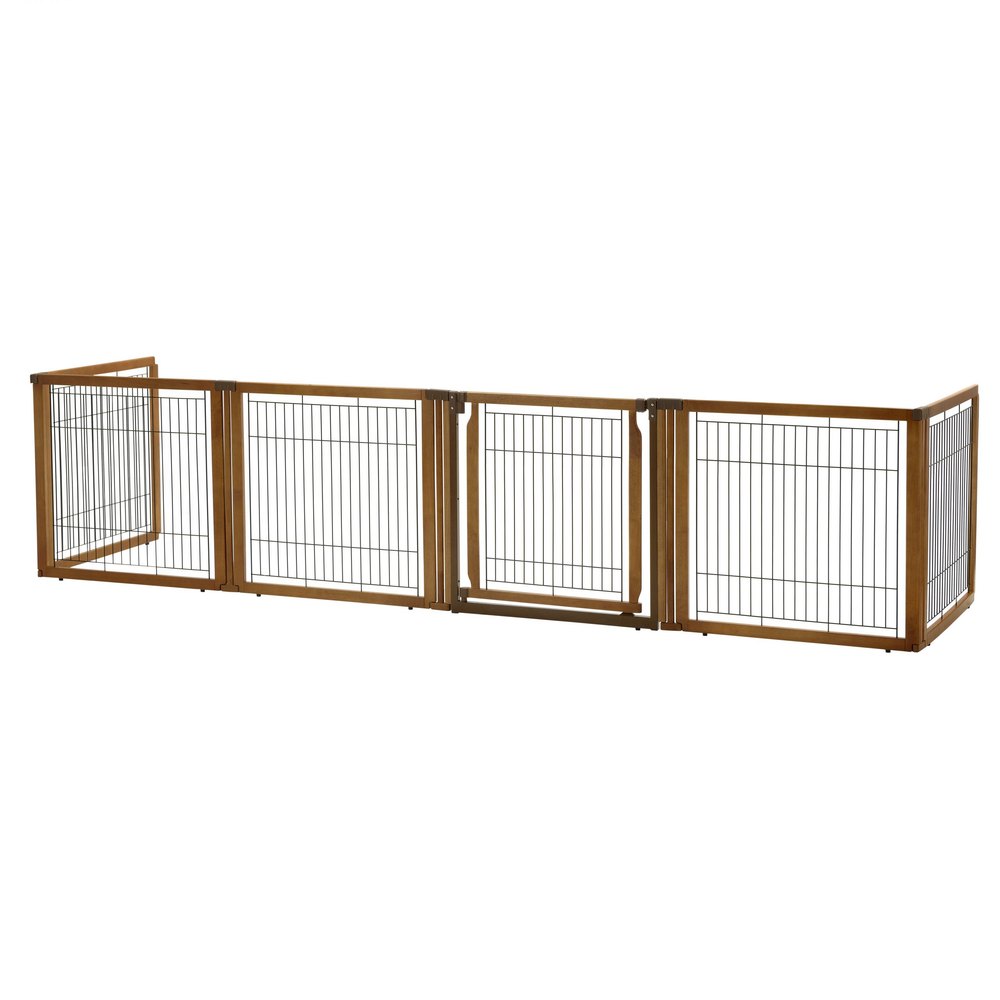
Richell Convertible Elite Pet Gate/Crate 6 Panel
Best for: Wide or odd-shaped spaces
This hardwood gate has six panels that lock at 90 and 180 degrees. You can set it up as a freestanding gate, a room divider or a pen. It has a door panel so you can pass through. It weighs 64.4 pounds and is made for dogs 8.8 to 88 pounds. The AKC says freestanding gates are less secure, so skip it for strong pushers or jumpers.
- Pro: Converts to a pen, gate or room divider
- Pro: Door panel lets you pass through
- Pro: Panels lock at 90 and 180 degrees
- Con: Weighs 64.4 pounds
- Con: Freestanding gates are less secure than mounted ones
How to choose a dog gate
Pick the mounting type
The AKC describes three types. Pressure-mounted gates need no tools and are easy to move, which suits renters, but they are less secure. Hardware-mounted gates attach to the wall or frame and are the most secure. Freestanding gates need no setup and work for odd spaces, but they are the least secure.
Measure your opening
Measure side to side where the gate will go. Pick a gate whose width range covers that number. North States notes that mounting can be harder at the very low and very high ends of a range. Check which extensions you need.
Choose the right height
The AKC says about 20 inches may be enough for puppies or small breeds. Bigger dogs and jumpers likely need at least 30 inches. Also look for furniture a dog could use to climb over.
Look at materials, bars and latch
The AKC says metal is the most durable and chew-resistant. Wood looks nice but needs a pet-safe finish. Plastic costs less but may not last with large or determined dogs. Avoid horizontal bars a dog can use as footholds. Choose gaps too small for a head or paw to get stuck. Pick a latch adults can use easily but dogs can’t open.
Safety tips
- Top of stairs: Use only a hardware-mounted gate there. North States also says it should swing toward the landing, not out over the stairs, and have no threshold to step over. Confirm with the maker that the gate is approved for stairs.
- Check the hardware often. Look at tension knobs and screws for looseness.
- Follow the instructions. Install the gate exactly as the manufacturer describes.
- Introduce it slowly. The AKC suggests letting your dog sniff the open gate, then closing it and rewarding calm behavior. Most dogs adjust over days or weeks.
- Babies and toddlers: The AKC says a dog gate shouldn’t replace a safety device for a child.
- If your dog needs a safe space while you’re out, see our guide to the best dog crates.
Common questions
How tall should a dog gate be?
The AKC says a gate about 20 inches tall may suit puppies or small breeds. Bigger dogs or jumpers likely need at least 30 inches.
Can I use a pressure-mounted gate at the top of stairs?
No. North States says only hardware-mounted gates are suitable at the top of stairs, and the AKC also recommends a hardware-mounted gate there. Check with the maker that your gate is approved for stairs.
What is the best material for a dog gate?
The AKC says metal is the most durable and chew-resistant. Wood looks nice but needs a pet-safe finish. Plastic costs less but may not hold up to large or determined dogs.
Can I use a baby gate for my dog?
It can work, but the AKC says baby gates are often lighter, shorter and less chew-resistant. A dog gate should not replace a safety gate for a baby or toddler.