Cats · Product picks
The Best Self-Cleaning Litter Boxes
The Litter-Robot 4 is our top pick. See five self-cleaning litter boxes compared by size, sensors and litter type, plus how to choose one safely.
We may earn a commission if you buy through links on this page. It never decides what we pick.How that works
The best self-cleaning litter box for most homes is the Litter-Robot 4. It handles cats from 3 to 25 pounds and up to four cats per unit. This guide also covers picks for kittens, large cats, and owners who want to skip scooping, plus how to choose and use one safely.
Our picks at a glance
- Best overall: Litter-Robot 4
- Best for kittens and small cats: Neakasa M1 Self-Cleaning Cat Litter Box
- Best low-profile design: ScoopFree SmartSpin Self-Cleaning Litter Box
- Best for large cats: ScoopFree OpenSky Self-Cleaning Litter Box
- Best for no-scoop crystal litter: ScoopFree Crystal Pro Self-Cleaning Litter Box
The best self-cleaning litter boxes
 Best overallPhoto: Litter-Robot
Self-cleaning litter boxes
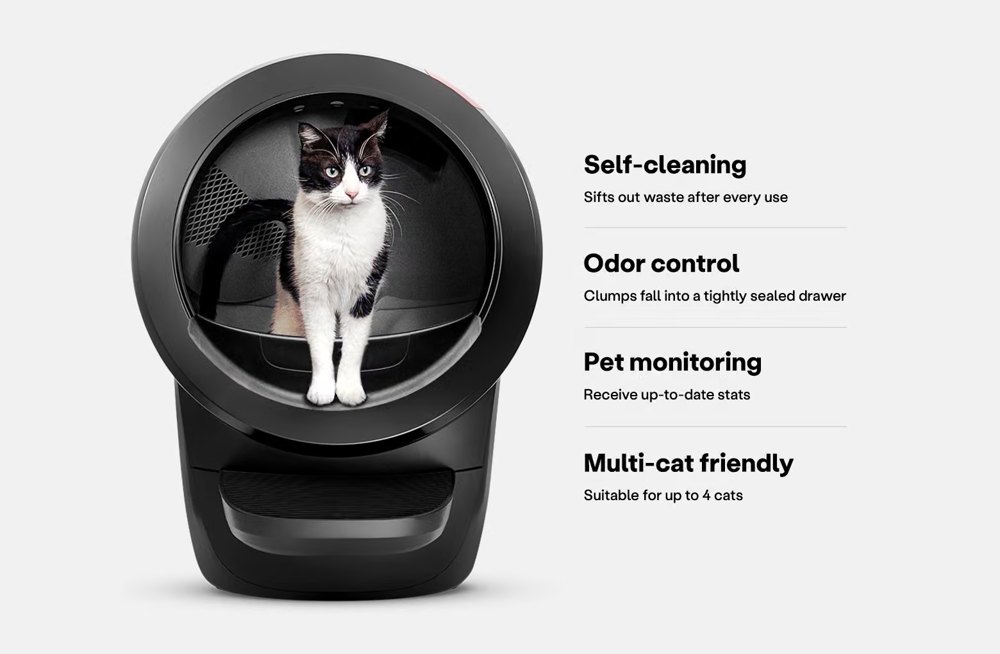
Litter-Robot 4
Best for: Multi-cat homes with space and a power outlet
The maker lists laser and weight sensors that detect when your cat enters and leaves. The cleaning cycle starts minutes after your cat exits, and you can extend that delay to 30 minutes for a nervous cat. It uses standard clumping clay litter. Skip it if you are short on space or have a senior cat, since it is large and cats must step up to enter.
- Pro: Laser and weight sensors detect your cat, and the cycle waits minutes after your cat leaves
- Pro: Works for cats from 3 to 25 pounds, with up to 4 cats per unit
- Pro: Sealed waste drawer with a carbon filter, plus app tracking of litter level and your cat's weight
- Con: Large footprint of about 22 by 27 inches, and it must be plugged in
- Con: Cats must step up to enter, which may be hard for seniors
 Best for kittens and small catsPhoto: Neakasa
Self-cleaning litter boxes
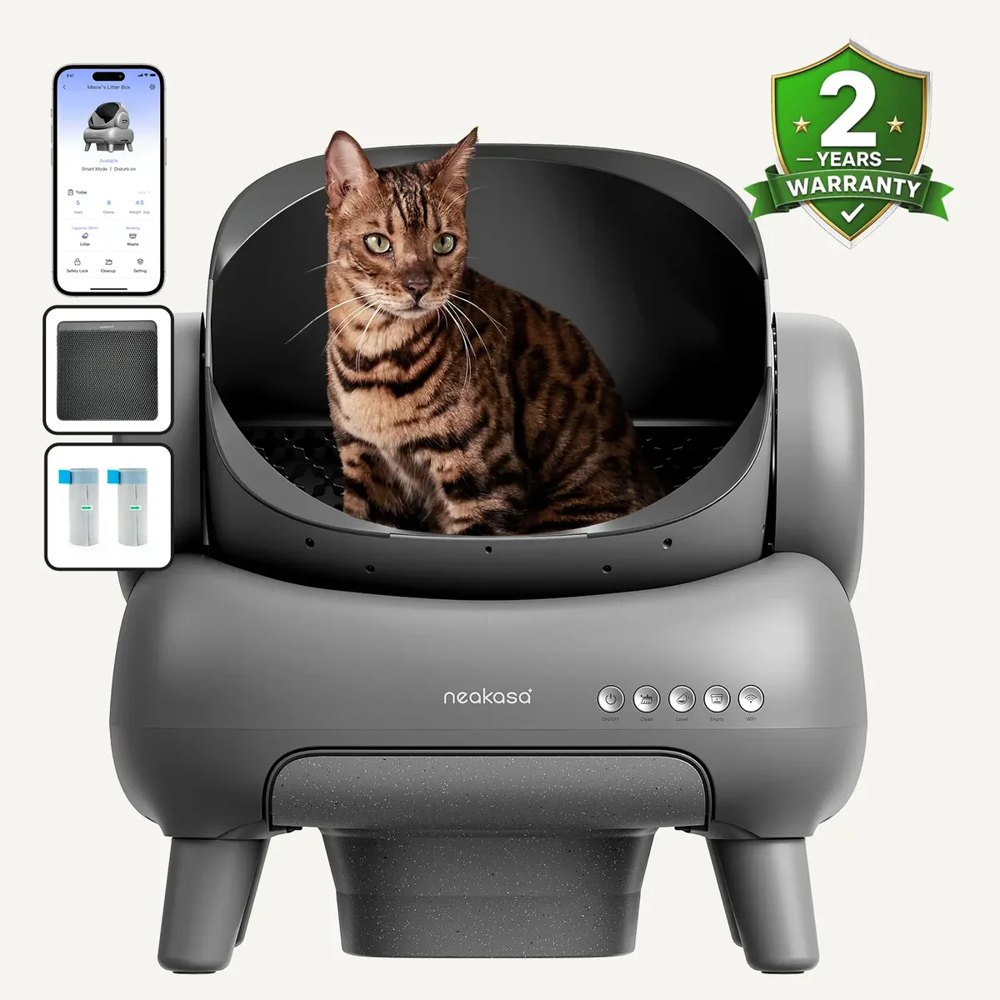
Neakasa M1 Self-Cleaning Cat Litter Box
Best for: Households with kittens or small cats
This open-top box lists a kitten mode and works for cats from about 2.2 pounds. Six infrared sensors and four weight sensors pause the cycle for safety. It needs fast-clumping, scoopable litter. Skip it if you use pellet, paper or other non-clumping litter.
- Pro: Works for cats from about 2.2 to 33 pounds, with a kitten mode
- Pro: Six infrared sensors and four weight sensors pause the cycle for safety
- Pro: 11.23-liter waste bin, listed at 14 days for one cat
- Con: Needs fast-clumping, scoopable litter, and non-clumping or pellet litters don't work
- Con: Needs a power outlet
 Best low-profile designPhoto: PetSafe
Self-cleaning litter boxes
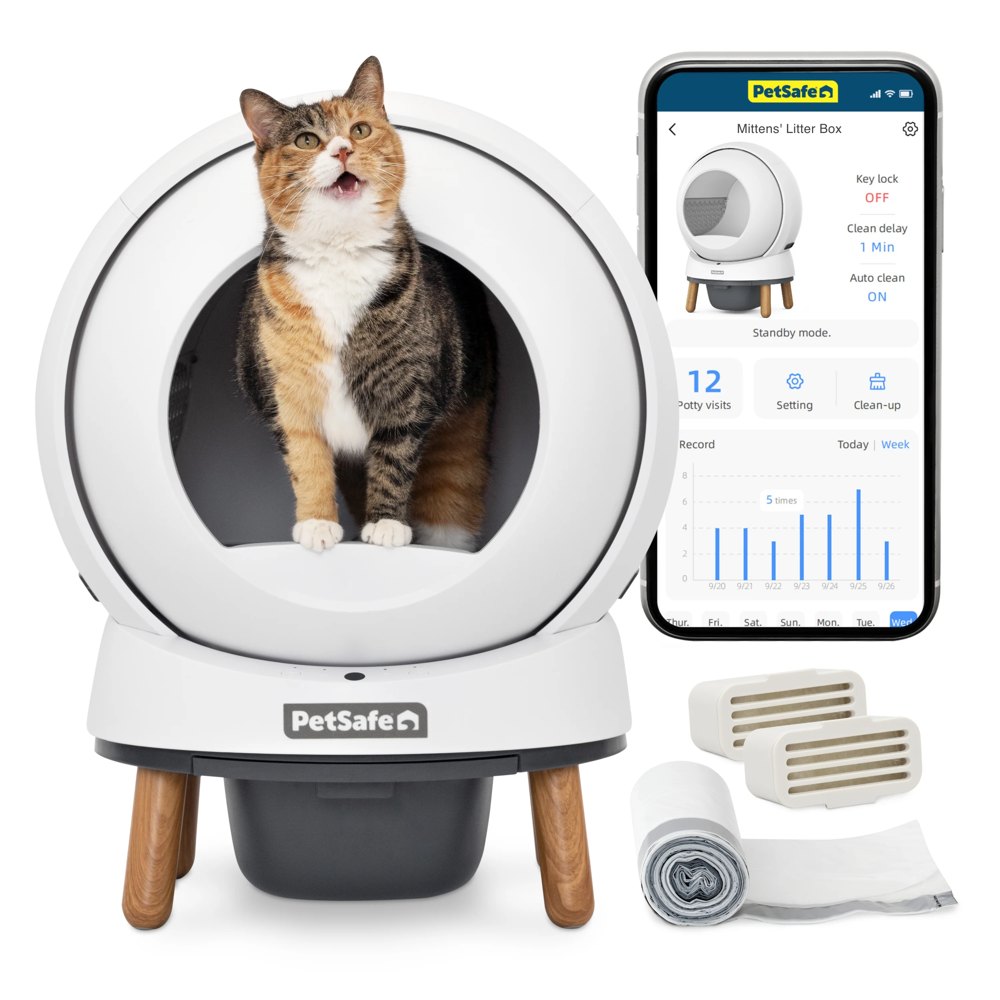
ScoopFree SmartSpin Self-Cleaning Litter Box
Best for: Single-cat homes that want a lower entry
This low-profile box sifts clumps into a sealed drawer with a deodorizer. PetSafe lists it for cats up to 25 pounds and for any clumping litter. It suits a one-cat home. Skip it if your cat is large or you want a drawer that holds more than about two weeks of waste.
- Pro: Low-profile design for easier entry
- Pro: Sealed 6-liter waste drawer, listed at up to 2 weeks of clumps
- Pro: Works with clumping litter and has an app that tracks weight and usage
- Con: Weight limit of 25 pounds
- Con: Waste drawer liners need replacing every couple of weeks
 Best for large catsPhoto: PetSafe
Self-cleaning litter boxes
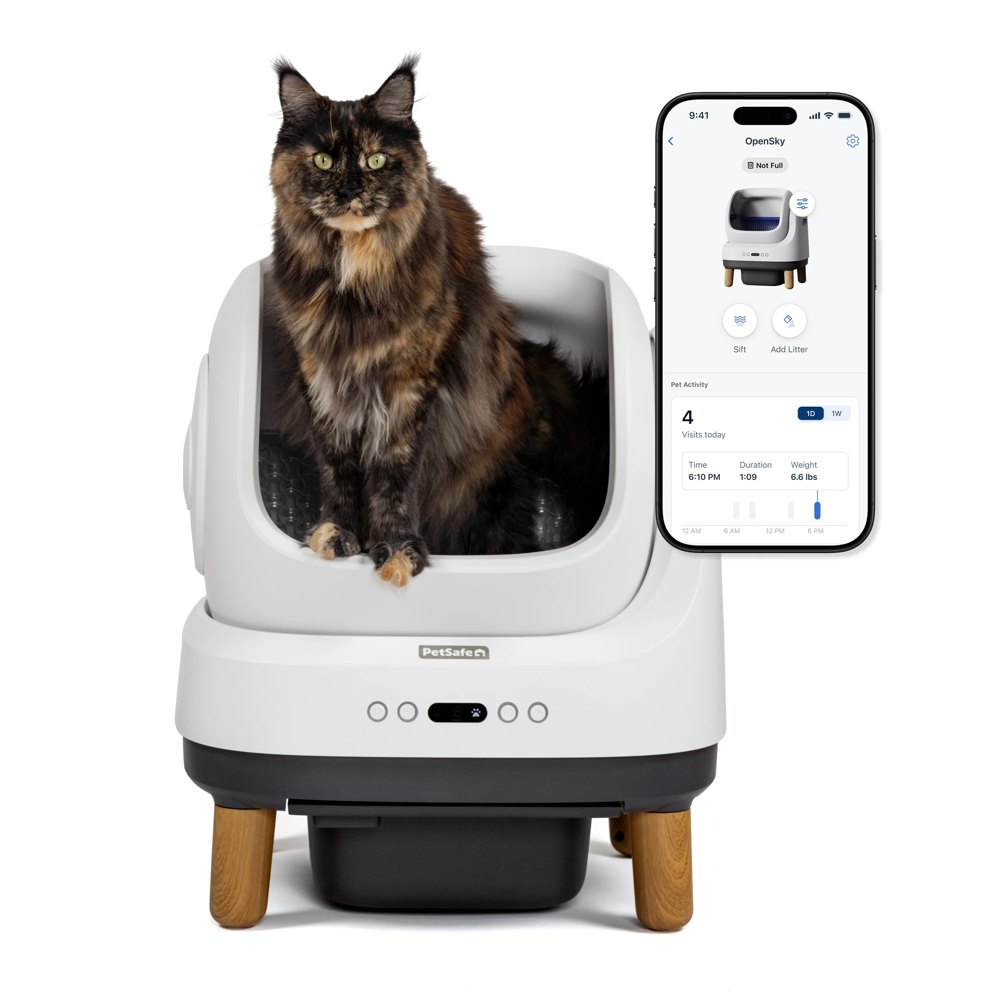
ScoopFree OpenSky Self-Cleaning Litter Box
Best for: Large cats and cats that dislike enclosed boxes
PetSafe lists this open-top box for cats up to 33 pounds. Its 8.5-liter drawer holds about two weeks of waste for one cat. The app tracks weight and visits. Skip it if you have no 2.4 GHz Wi-Fi, or if you need a small box for a tight spot.
- Pro: Open top, with cats up to 33 pounds listed
- Pro: 8.5-liter waste drawer, about two weeks of waste for one cat
- Pro: App shows weight trends and how often your cat visits
- Con: Fairly big, at 20 by 18.8 by 24 inches
- Con: The app needs a 2.4 GHz Wi-Fi network
 Best for no-scoop crystal litterPhoto: PetSafe
Self-cleaning litter boxes
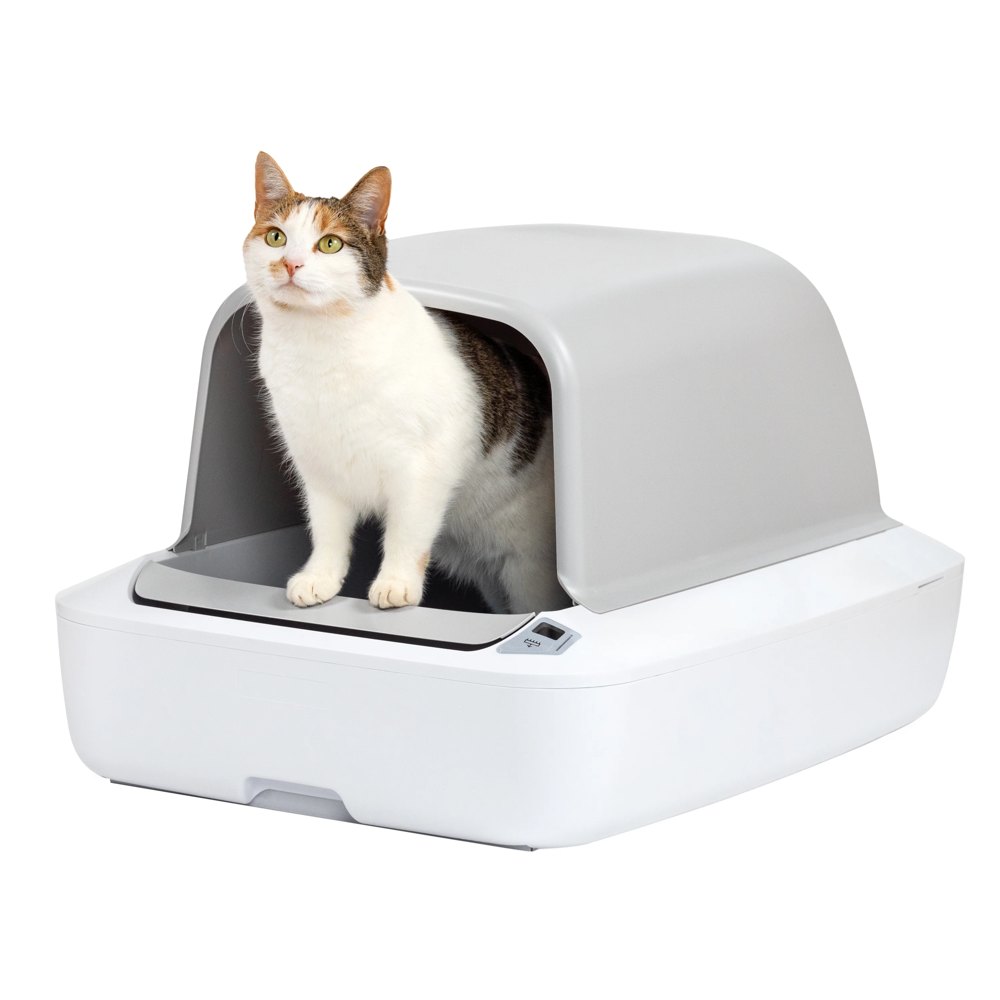
ScoopFree Crystal Pro Self-Cleaning Litter Box
Best for: Owners who want to skip scooping and daily litter handling
This hooded box rakes waste into a sealed area and uses disposable crystal litter trays. PetSafe lists up to 30 days between tray changes. Skip it if your cat dislikes hoods or you want to choose your own litter, because it works only with ScoopFree Crystal Litter trays.
- Pro: Listed at up to 30 days of hands-free cleaning between tray replacements
- Pro: Automatically rakes waste into a sealed area
- Pro: Hood included to reduce tracking and odor
- Con: Works only with ScoopFree Crystal Litter trays
- Con: Hooded, and many cats prefer uncovered boxes
How to choose a self-cleaning litter box
Check safety sensors first
Look for sensors that stop the machine when your cat is inside or on the step. Consumer Reports notes that the Litter-Robot 4 pauses its turning when it senses a cat’s weight on the step or inside the box. The Neakasa M1 page lists infrared and weight sensors that pause the cycle. Read each maker’s minimum cat weight too. The Litter-Robot 4 needs a cat of at least 3 pounds for automatic mode.
Match the size to your cat
Cornell says larger cats need bigger boxes, and kittens and older cats need boxes with low sides. Check the weight range and the entry height before you buy. Consumer Reports found that a tall step was hard for a 17-year-old cat.
Pick the right litter
Each box works with certain litters. Some need clumping litter, and the Crystal Pro needs its own crystal trays. Using the wrong litter can stop the machine from working. Cornell says to change litter brands slowly, so plan any switch ahead.
Think about space and power
These boxes plug in and can be large. Consumer Reports said the Litter-Robot 4 and the PetSafe ScoopFree Pro were hard to place in one reviewer’s home because of their size and the need for an outlet. Measure your spot first.
Open or covered?
Cornell says most cats prefer uncovered boxes, because covers hold in odors. The ASPCA says most cats don’t like lids. If your cat is nervous about hoods, an open-top box may be a better fit.
Count your boxes
Cornell and the ASPCA both say to have one box per cat, plus one extra. Put boxes in quiet, easy-to-reach spots, away from food and busy areas.
Safety tips
- Watch the first uses. Stay nearby while your cat gets used to the machine, and turn off any loud or moving features if your cat seems scared.
- Keep a regular box available. The ASPCA says that if your cat starts going outside a self-cleaning box, try a traditional box.
- Call your vet about changes. Cornell says to see a vet to rule out medical problems when a cat has litter box trouble. Many apps track visits and weight, which can help you notice changes. They don’t replace a vet exam.
- Follow the maker’s rules. Use only the litter the maker lists, and follow weight limits, especially for kittens.
- Keep it clean. The ASPCA says to rinse the box out completely once a week with baking soda or unscented soap. Cornell says to replace litter often enough that it looks and smells dry and clean.
Common questions
Do cats like self-cleaning litter boxes?
Many do. The ASPCA says self-cleaning boxes are generally cleaner than regular boxes, so many cats accept them readily. If your cat starts going outside the box, the ASPCA suggests switching back to a regular box.
Do self-cleaning litter boxes still need any care?
Yes. You still empty the waste drawer or replace the tray, and you still need to wash the box. Cornell says to replace litter often enough that it looks and smells dry and clean.
How many litter boxes do I need?
Cornell and the ASPCA both say to have one box for each cat, plus one extra. A single automatic box can be one of those boxes, but it does not replace the extra.
Should I use a covered or open litter box?
Cornell says most cats prefer uncovered boxes, because covers hold in odors and block a cat’s view. The ASPCA says most cats don’t like lids. Watch your cat’s behavior and adjust.
Sources
- ASPCA: Litter Box Problems
- Cornell Feline Health Center: Feline Behavior Problems: House Soiling
- Consumer Reports: Best Cat Litter Boxes
- Litter-Robot: Litter-Robot 4
- Neakasa: M1 Self-Cleaning Cat Litter Box
- PetSafe: ScoopFree SmartSpin Self-Cleaning Litter Box
- PetSafe: ScoopFree OpenSky Self-Cleaning Litter Box
- PetSafe: ScoopFree Crystal Pro Self-Cleaning Litter Box