Dogs · Product picks
The Best Slow Feeder Dog Bowls
The Outward Hound Fun Feeder Slo Bowl is our top pick for dogs who gulp. See four slow feeders and how to choose the right size and material.
We may earn a commission if you buy through links on this page. It never decides what we pick.How that works
If your dog gulps dinner in seconds, a slow feeder bowl can help. Ridges, mazes and posts make it harder to take big bites. Our top pick is the Outward Hound Fun Feeder Slo Bowl, a plastic maze bowl in three sizes. Below are four options and how to choose.
Our picks at a glance
- Best overall: Outward Hound Fun Feeder Slo Bowl
- Best stainless steel: Outward Hound Fun Feeder Stainless Steel Slow Feeder Dog Bowl
- Best for big and small dogs: Neater Pets Non-Tip Stainless Steel Slow Feed Bowl
- Best for active mealtimes: KONG Wobbler
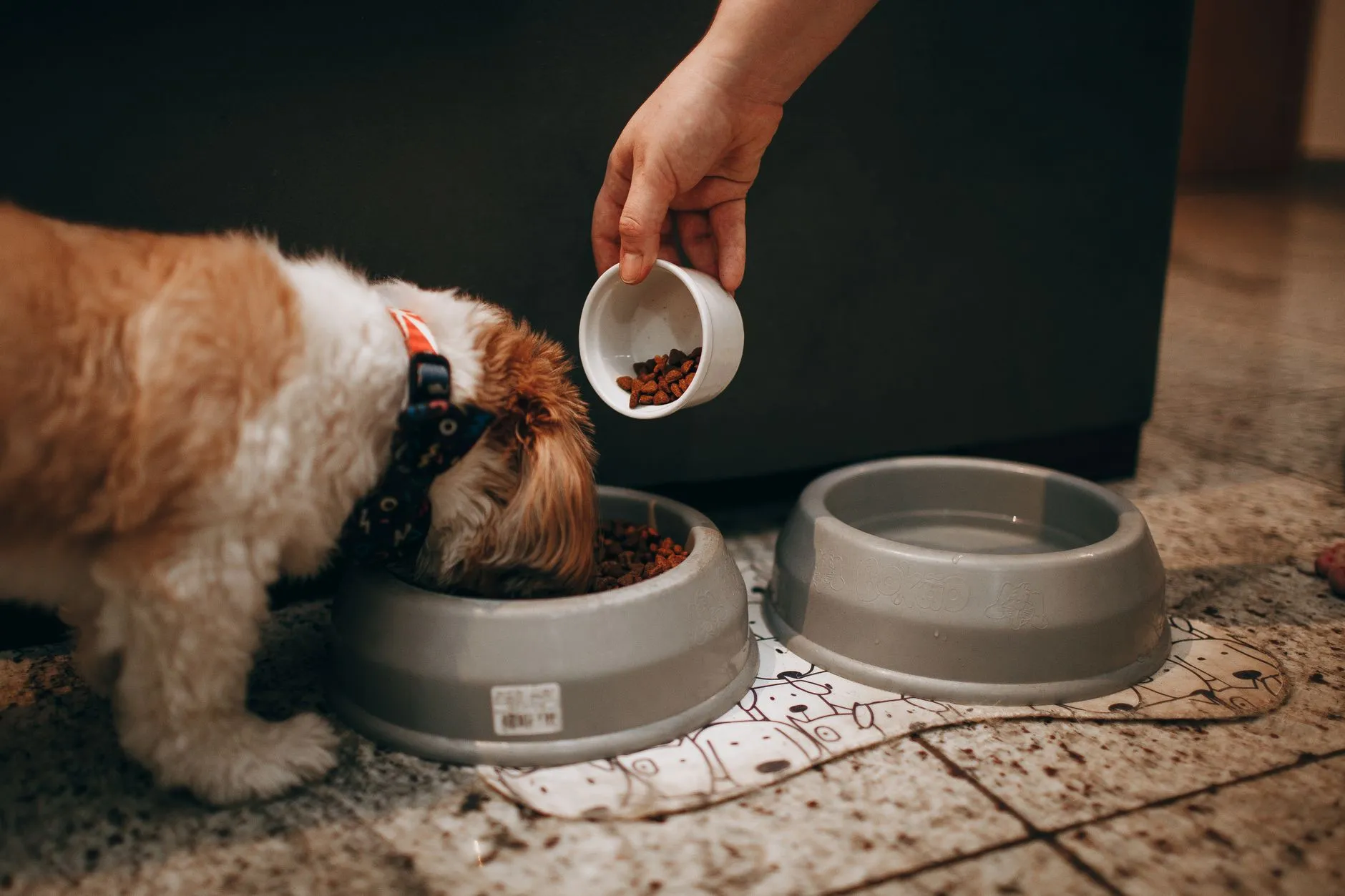
The best slow feeder dog bowls
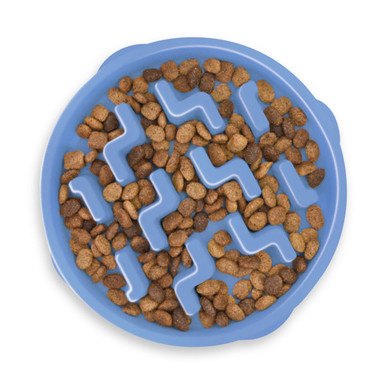 Best overallPhoto: Outward Hound
Slow feeder dog bowls
Outward Hound Fun Feeder Slo Bowl
Best for: Most fast eaters on dry or wet food
This plastic bowl has ridges and grooves in a maze shape, and a non-slip base. It comes in small (3/4 cup), medium (2 cups) and large (3-4 cups), so it suits many dogs. Outward Hound says it works with dry or wet food. Skip it if you want a metal bowl.
- Pro: Three sizes, from 3/4 cup to 3-4 cups
- Pro: Non-slip base and top-rack dishwasher safe
- Pro: Free of BPA, PVC, lead and phthalates
- Con: Plastic, so check it for damage and replace it if it cracks or gets chewed
- Con: Deep mazes can frustrate some dogs
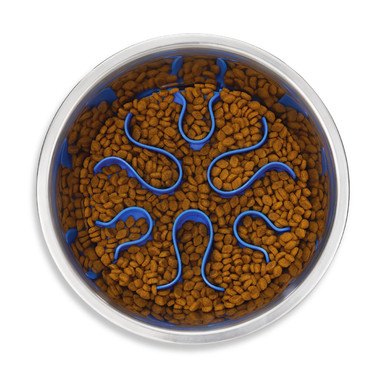 Best stainless steelPhoto: Outward Hound
Slow feeder dog bowls
Outward Hound Fun Feeder Stainless Steel Slow Feeder Dog Bowl
Best for: Dogs who need a metal, non-plastic bowl
This one is made of stainless steel and has a removable maze insert. Outward Hound calls it its most challenging slow feeder maze design. It holds 2 cups of dry or wet food. Skip it if your dog needs a smaller or larger bowl, since we found only the 2-cup size.
- Pro: Stainless steel with a removable maze insert
- Pro: Holds 2 cups of dry or wet food
- Pro: Non-slip base, top-rack dishwasher safe
- Con: Listed in a single 2-cup size
- Con: Insert makes it a bit more work to clean than a plain bowl
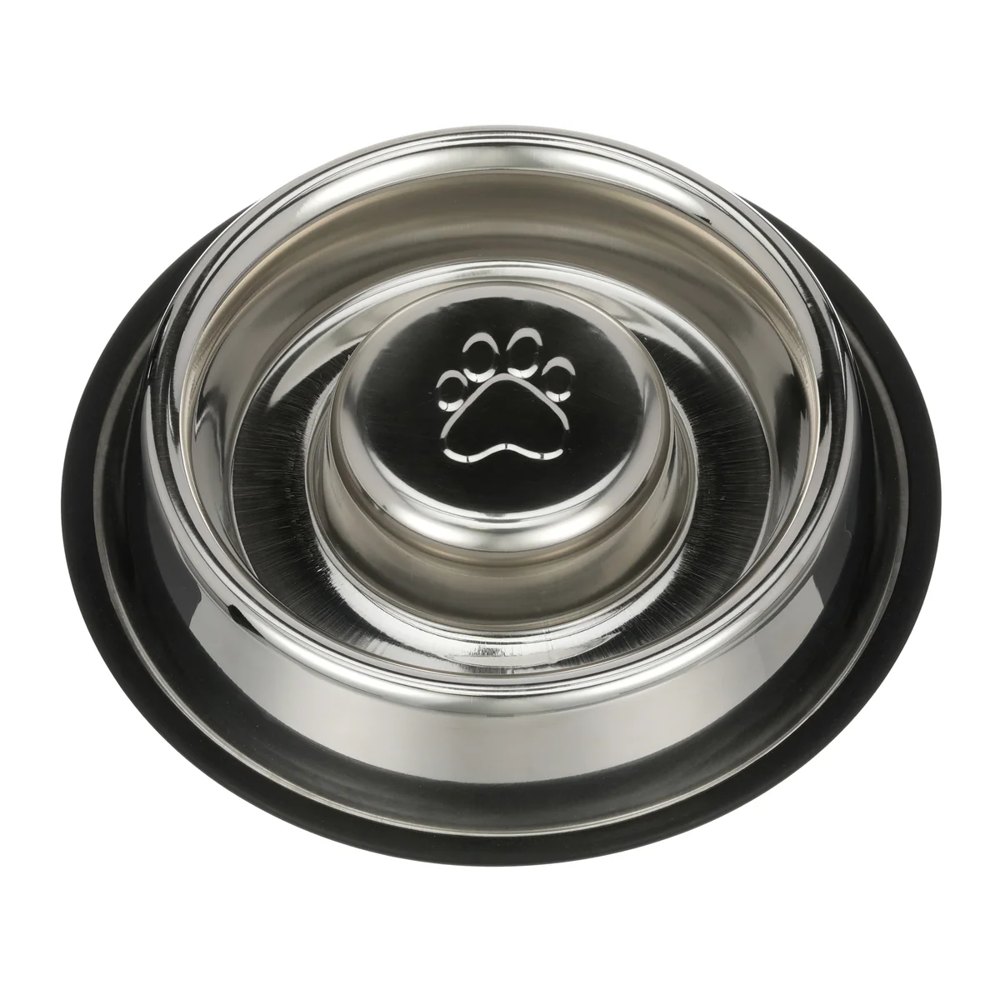 Best for big and small dogsPhoto: Neater Pets
Slow feeder dog bowls
Neater Pets Non-Tip Stainless Steel Slow Feed Bowl
Best for: Dogs of any size, including very small or large ones
This stainless steel bowl has a non-tip design and a removable non-skid rubber ring. It comes in four sizes, from 3/4 cup to 5 cups, which helps with very small and very large dogs. It is dishwasher safe. Skip it if you want a bowl made only for dogs, since Neater also sells it for cats.
- Pro: Four sizes, from 3/4 cup to 5 cups
- Pro: Non-tip design with a removable non-skid ring
- Pro: Stainless steel and dishwasher safe
- Con: Also sold for cats, so the design is less dog-specific
- Con: Rubber ring has to be removed for cleaning
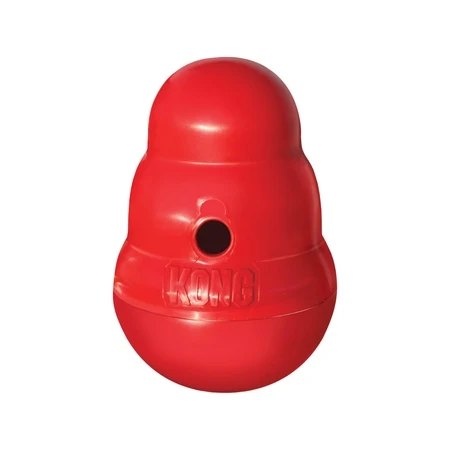 Best for active mealtimesPhoto: KONG
Slow feeder dog bowls
KONG Wobbler
Best for: Dogs who need mental and physical activity at mealtime
This is a feeder, not a bowl. Your dog nudges it and it wobbles and rolls, dropping out food. KONG says it can replace a bowl at mealtime, and the large size is for dogs 30-65 lbs. Skip it for wet food, and never leave your dog alone with it. KONG says it is not a chew toy.
- Pro: Small (dogs up to 20 lbs) and Large (30-65 lbs) sizes
- Pro: Unscrews for filling, top is dishwasher safe
- Pro: Can replace the food bowl at mealtime
- Con: Not a chew toy and for supervised use only
- Con: Made for dry kibble and small treats, not wet food
How to choose a slow feeder dog bowl
Why slow down a fast eater?
The AKC says dogs that eat very fast can choke or vomit. It also says gulping air with food may raise the risk of bloat. Bloat is when the stomach swells and may twist, and it is life-threatening. An AKC article on bloat says fast eaters have a higher risk than slower eaters, and that slow feeder bowls physically slow dogs down.
Pick the right size
Choose a bowl that holds your dog’s whole meal. Check the cup size on the product page. Sizes in this guide range from 3/4 cup to 5 cups. Ask your vet how much food your dog needs each day.
Plastic or stainless steel?
Plastic bowls come in many maze shapes. Look for a listing that says BPA-free, as Outward Hound does for its bowls. Stainless steel bowls, like the Neater and the stainless Outward Hound, avoid plastic. Whichever you pick, check for dishwasher-safe care instructions so cleaning is easy.
Look for a non-slip base
A bowl that slides around or tips makes a mess and can make mealtime frustrating. Non-slip bases and non-tip designs help keep it in place.
Other ways to slow down eating
The AKC also suggests puzzle toys, spreading food on a cookie sheet, and smaller meals two or three times a day. Some dogs may do well with one of these instead of a bowl.
Safety tips
- Watch your dog the first few meals. A maze that is too hard may frustrate your dog.
- Use supervised mealtimes for feeders like the KONG Wobbler. KONG says to stop using it if it is damaged.
- Check bowls for cracks or chewed edges and replace damaged ones.
- Call your vet right away if your dog’s belly looks swollen or your dog seems unwell after eating. Bloat is an emergency.
- Ask your vet about portions. To keep other food hazards in mind, see our list of foods that are toxic to dogs.
Common questions
Do slow feeder bowls really help dogs eat slower?
That is what they are built to do. The AKC lists slow feeder bowls as one way to slow a fast eater, because ridges and posts make it hard to take big gulps.
Can a slow feeder bowl stop bloat?
No bowl can promise that. An AKC article on bloat says fast eaters have a higher risk, and slow feeder bowls physically slow dogs down. Bloat is an emergency, so call your vet right away if your dog has a swollen belly.
Are slow feeder bowls good for wet food?
Some are. Outward Hound says its Fun Feeder bowls work with dry or wet food. The KONG Wobbler is made for dry kibble and small treats.
How often should I feed my dog?
The AKC suggests smaller meals two or three times a day for a fast eater instead of one big meal. Ask your vet how much your dog should eat each day.