Cats · Product picks
The Best Cat Dental Treats
Feline Greenies Dental Treats are our top pick. See four cat dental treats, what the VOHC seal means, and why treats do not replace brushing.
We may earn a commission if you buy through links on this page. It never decides what we pick.How that works
This guide is for cat owners who want a daily dental treat to go with brushing and vet care. Our top pick is Feline Greenies Dental Treats, which the Veterinary Oral Health Council lists for tartar control. No treat replaces brushing, and the picks below suit different cats and routines.
Our picks at a glance
- Best overall: Feline Greenies Dental Treats
- Best for a small daily serving: C.E.T. IntelliDent Cat Bites
- Best with added probiotics: WHIMZEES Chicken Cat Dental Treats
- Best two-layer chew: VetriScience Dental Care Dental Bites for Cats
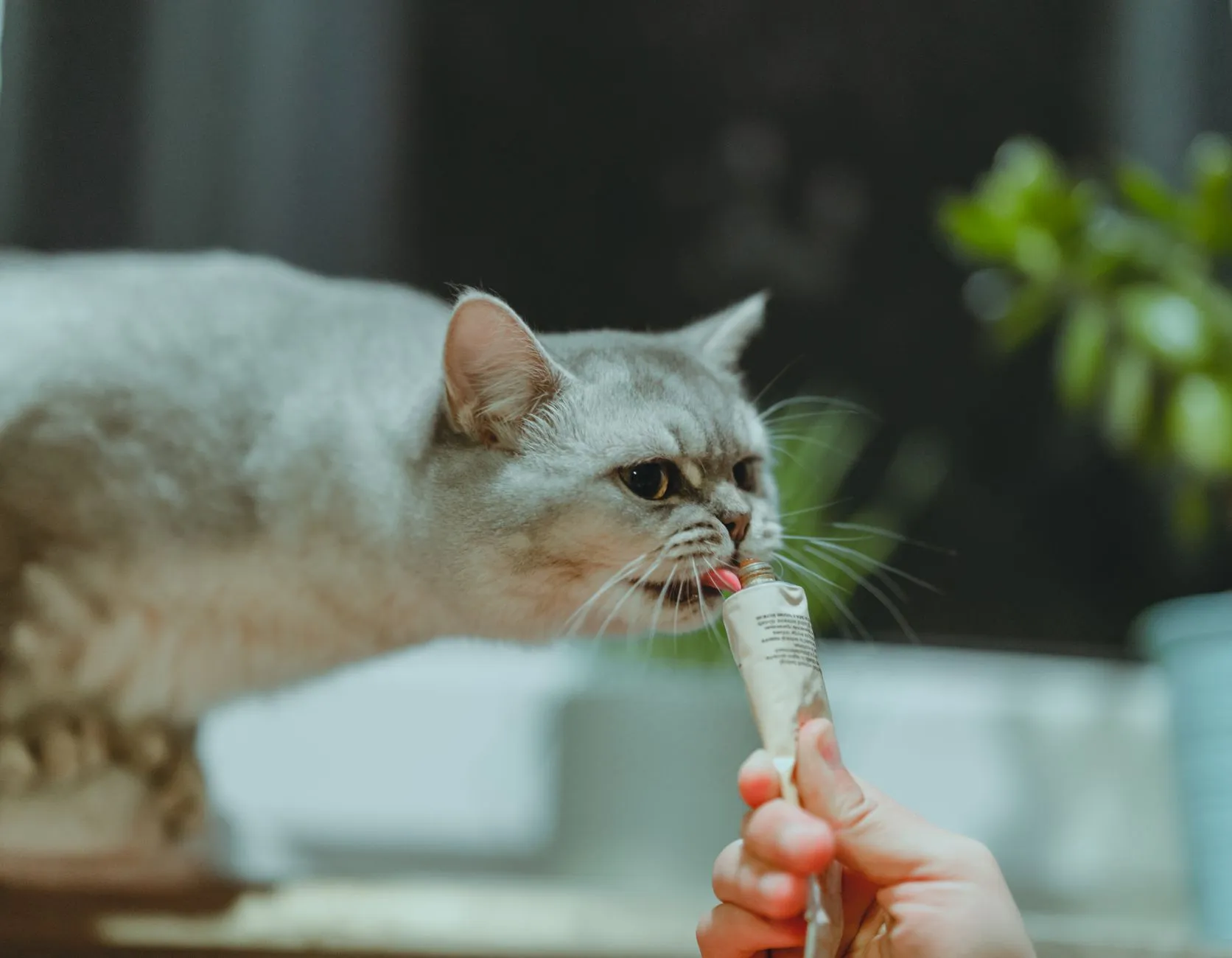
The best cat dental treats
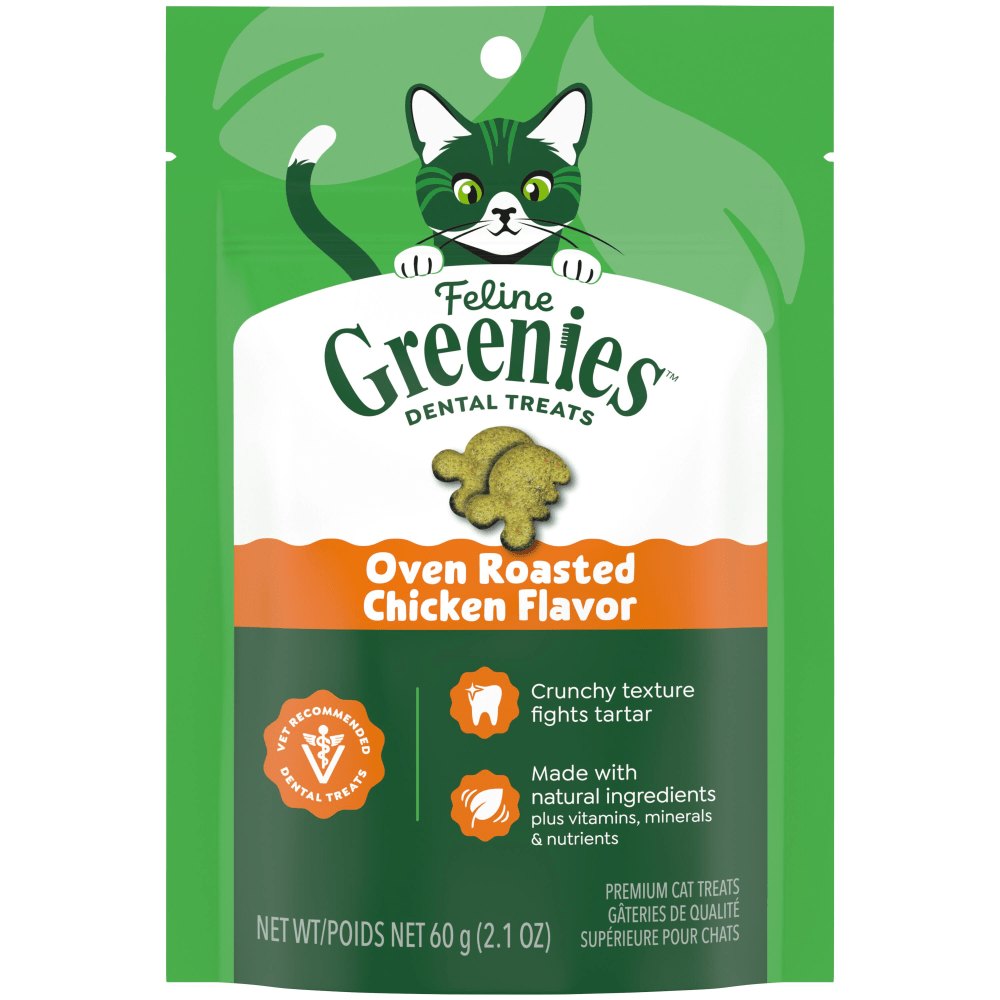 Best overallPhoto: GREENIES
Dental treats for cats
Feline Greenies Dental Treats
Best for: Adult cats who like a crunchy daily treat
Feline Greenies is the one on this list that appears in the Veterinary Oral Health Council’s list of accepted cat products, for tartar. The treats are crunchy, shaped to clean down to the gumline, and under two calories each. They come in chicken, tuna, salmon and catnip flavors. They are for cats 1 year or older, so skip them for kittens. The maker’s own tartar figure comes from its internal data, not an outside study.
- Pro: Listed by the Veterinary Oral Health Council for tartar control
- Pro: Under two calories per treat
- Pro: Sold in chicken, tuna, salmon and catnip flavors and four bag sizes
- Con: Only for cats 1 year or older
- Con: Feeding directions differ between package pages, so follow your bag
Dental treats for cats
C.E.T. IntelliDent Cat Bites
Best for: Owners who want a short, simple daily routine
Virbac recommends just three bites a day, which makes this an easy habit to keep. It is one size for all cats. The brand says the bites work with your cat’s natural chewing to help reduce plaque and tartar, and cites a 2020 study. The page doesn’t list flavors or ingredients, and we didn’t find the product on the VOHC list. Look at the package if your cat has food allergies.
- Pro: Serving is only 3 bites a day
- Pro: One size for all cats
- Pro: No artificial preservatives and low in fat
- Con: The brand page doesn't list flavors or ingredients
- Con: Not listed by the Veterinary Oral Health Council
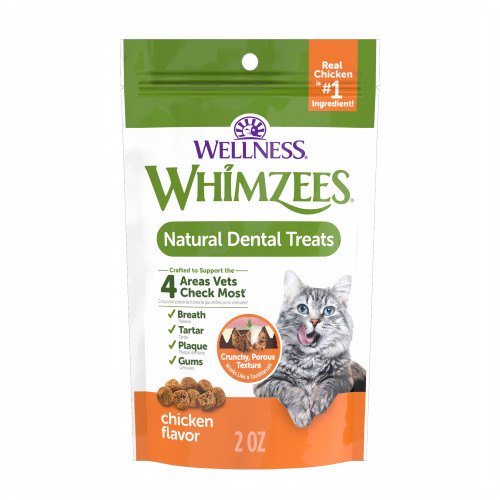 Best with added probioticsPhoto: Wellness
Dental treats for cats
WHIMZEES Chicken Cat Dental Treats
Best for: Adult cats who like chicken
Wellness says these treats act like a toothbrush to support breath, plaque, tartar and gums. The ingredients include deboned chicken, cranberries, taurine and probiotics. The manufacturer’s feeding guide is for adult cats, based on a 10 lb cat. They contain chicken and wheat, so skip them if your cat reacts to either. We didn’t find them on the VOHC list.
- Pro: Listed ingredients include deboned chicken, cranberries and taurine
- Pro: Contains probiotic fermentation products
- Pro: Comes in 2 oz and 4.5 oz pouches
- Con: Contains chicken and wheat, so skip it for cats that react to them
- Con: Feeding guide is only given for a 10 lb cat
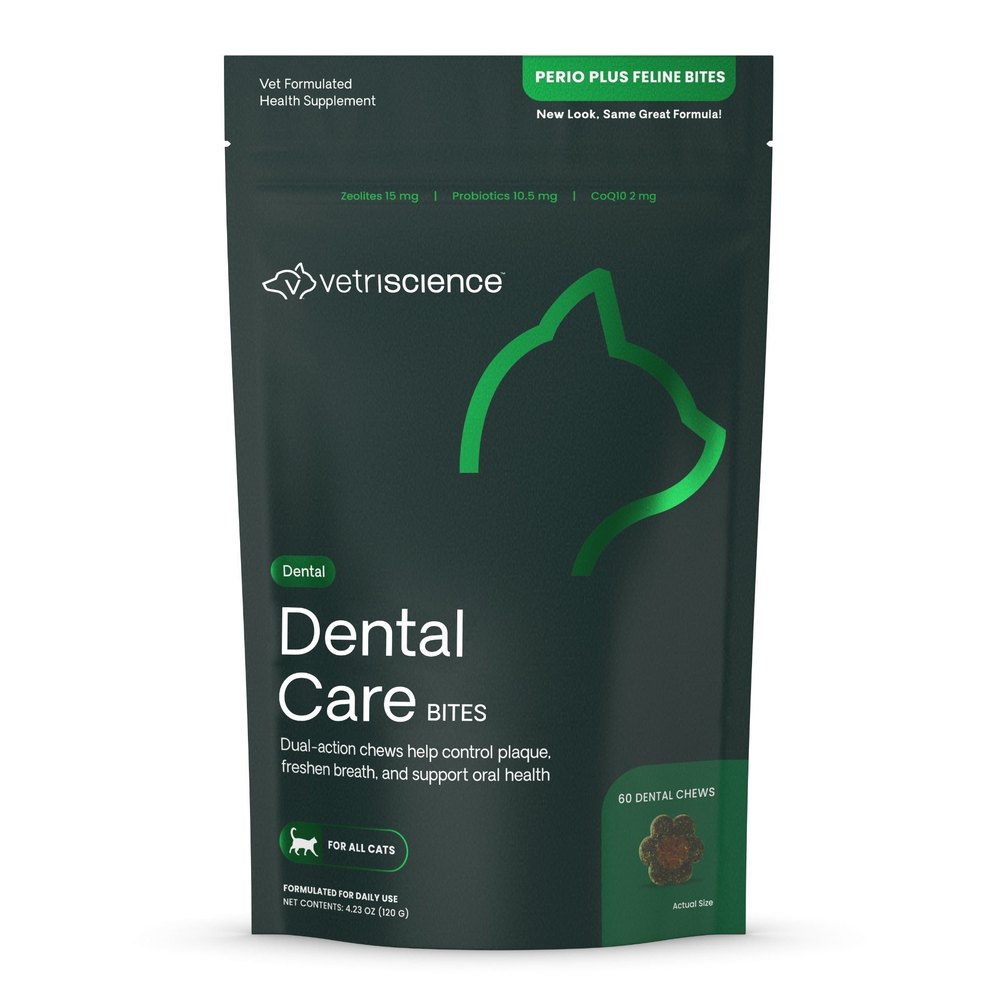 Best two-layer chewPhoto: VetriScience
Dental treats for cats
VetriScience Dental Care Dental Bites for Cats
Best for: Cats that prefer a soft, chewy treat
This chew has a rough outer layer with pumice and spirulina, plus a soft center with probiotics. It is flavored with hydrolyzed chicken liver, and VetriScience says it is for cats of any age. The brand suggests 2 chews a day for cats up to 10 lbs and 4 for cats over 10 lbs. The page doesn’t mention VOHC, and safe use in pregnant or breeding cats hasn’t been proven.
- Pro: Rough outer layer with pumice and spirulina to scrape teeth
- Pro: Soft center with probiotics and antioxidants
- Pro: Labeled for cats of any age
- Con: The brand page doesn't mention the Veterinary Oral Health Council
- Con: Safe use in pregnant or breeding cats hasn't been proven
How to choose cat dental treats
Start with brushing
Cornell Feline Health Center says daily brushing prevents most dental disease. Use a cat toothbrush and toothpaste made for cats. Cornell also says human toothpaste is not safe for cats. The Veterinary Oral Health Council also calls daily brushing the gold standard. Think of treats as a helper, not a fix.
Look for the VOHC seal
The Veterinary Oral Health Council (VOHC) gives its seal to products that show they control plaque, tartar, or both. It does not test products itself. A council of veterinary dentists and dental scientists reviews data from the maker. You can check its accepted products list before you buy. A product without the seal isn’t proven bad, but its dental claims haven’t been through that review.
Check the label and the calories
Treats add calories. Both Greenies and WHIMZEES tell owners to cut back the main meal to make up for them. Check the age on the package. Check the ingredients too if your cat has food allergies. Follow the feeding directions on your bag, because they can differ from product to product.
Know when a treat is not enough
Cornell says between 50 and 90 percent of cats older than four have some kind of dental disease. Signs include bad breath, drooling, turning the head while chewing, and not wanting to eat. Red, swollen or bleeding gums are another sign. Treats can’t fix this. Cornell says removing plaque by scaling usually needs anesthesia. Cats with painful gums may also find brushing hurts, so ask your vet first.
Safety tips
- Ask your vet first if your cat has bad breath, sore gums or trouble eating. These can point to a health problem.
- Watch your cat while they eat treats, as the Greenies page advises.
- Offer fresh water. Greenies’ directions say to provide fresh water.
- Cut back the main meal a little to make up for treat calories.
- Skip human dental products. Use only toothpaste and brushes made for cats.
- Stop and call your vet if a treat seems to upset your cat’s stomach. VetriScience says to stop use if a pet’s condition worsens.
Common questions
Do dental treats really clean cat teeth?
Some may help slow plaque or tartar, but the Veterinary Oral Health Council says daily brushing is the gold standard. Treats work best as an add-on to brushing and vet checkups.
What does the VOHC seal mean on cat treats?
The Veterinary Oral Health Council gives its seal to products that show they control plaque, tartar, or both when used as directed. VOHC does not test products itself. It reviews the data that makers send in.
Can I use human toothpaste on my cat?
No. Cornell Feline Health Center says human toothpaste is not safe for cats and human dental products can be toxic to them. Use only products made for cats.
How do I know if my cat has dental disease?
Cornell Feline Health Center lists signs such as bad breath, drooling, turning the head while chewing, and not wanting to eat. Red, swollen or bleeding gums are also a sign. Call your vet if you see these.
Sources
- Veterinary Oral Health Council: Home
- Veterinary Oral Health Council: Accepted products
- Cornell Feline Health Center: Feline Dental Disease
- GREENIES: Feline Dental Oven Roasted Chicken Flavor Cat Treats
- Virbac: C.E.T. IntelliDent Cat Bites
- Wellness: WHIMZEES Chicken Cat Dental Treats
- VetriScience: Dental Care Dental Bites for Cats