Cats · Product picks
The Best Covered Litter Boxes for Cats
The Catit Airsift hooded box is our top pick. See five covered litter boxes compared by size, filters and entry style, plus how to choose and use one.
We may earn a commission if you buy through links on this page. It never decides what we pick.How that works
The best covered litter box for most homes is the Catit Litter Box with Airsift Filter System. It has a roomy hood, a lift-up door and an odor filter pad. Keep in mind that vets say most cats prefer open boxes. This guide covers five covered picks and how to try one without upsetting your cat.
Our picks at a glance
- Best overall: Catit Litter Box with Airsift Filter System
- Best for litter scatter: Petmate Booda Cleanstep Litter Dome
- Best compact: Petmate Booda Dome Litter Box
- Best top-entry box: IRIS USA Top Entry Cat Litter Box with Scoop, Large
- Best no-scoop option: Omega Paw Roll’n Clean Litterbox
The best covered litter boxes
 Best overallPhoto: Catit
Covered litter boxes
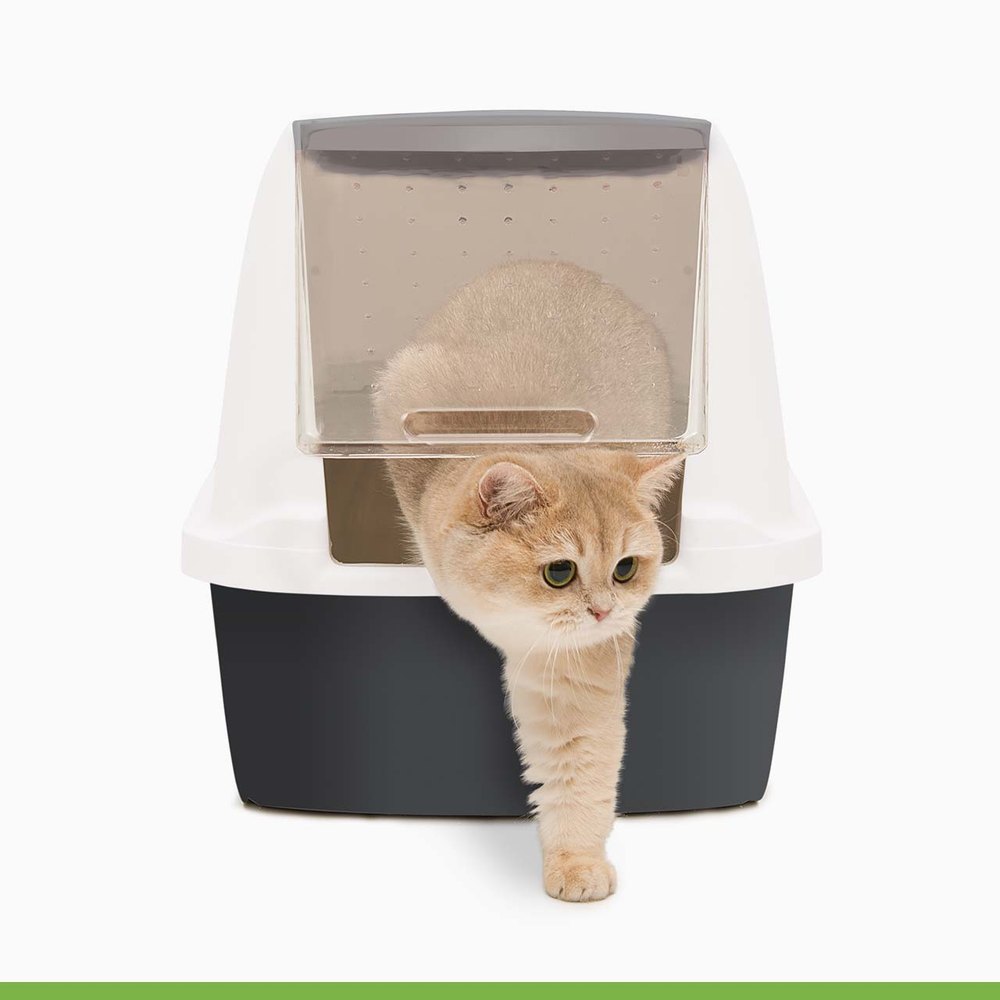
Catit Litter Box with Airsift Filter System
Best for: Homes that want a roomy hood with easy scooping
This hooded box comes in Regular and Jumbo. Both have the same door opening, about 10.4 by 9.6 inches, but the Jumbo is wider inside. The front door lifts up and folds back, and a built-in anchor holds a waste bag open. One odor pad is included, and Catit says each pad lasts about 30 days. Skip it if your cat is very big, since the door size does not change.
- Pro: Comes in Regular and Jumbo sizes (the Jumbo is about 4.4 inches wider)
- Pro: Front door lifts up and folds back, with a built-in bag anchor for scooping
- Pro: Raised back and overlap design to help prevent urine leaks
- Con: Same door opening on both sizes, so it may be tight for very large cats
- Con: Filter pad needs replacing about every 30 days
 Best for litter scatterPhoto: Petmate
Covered litter boxes
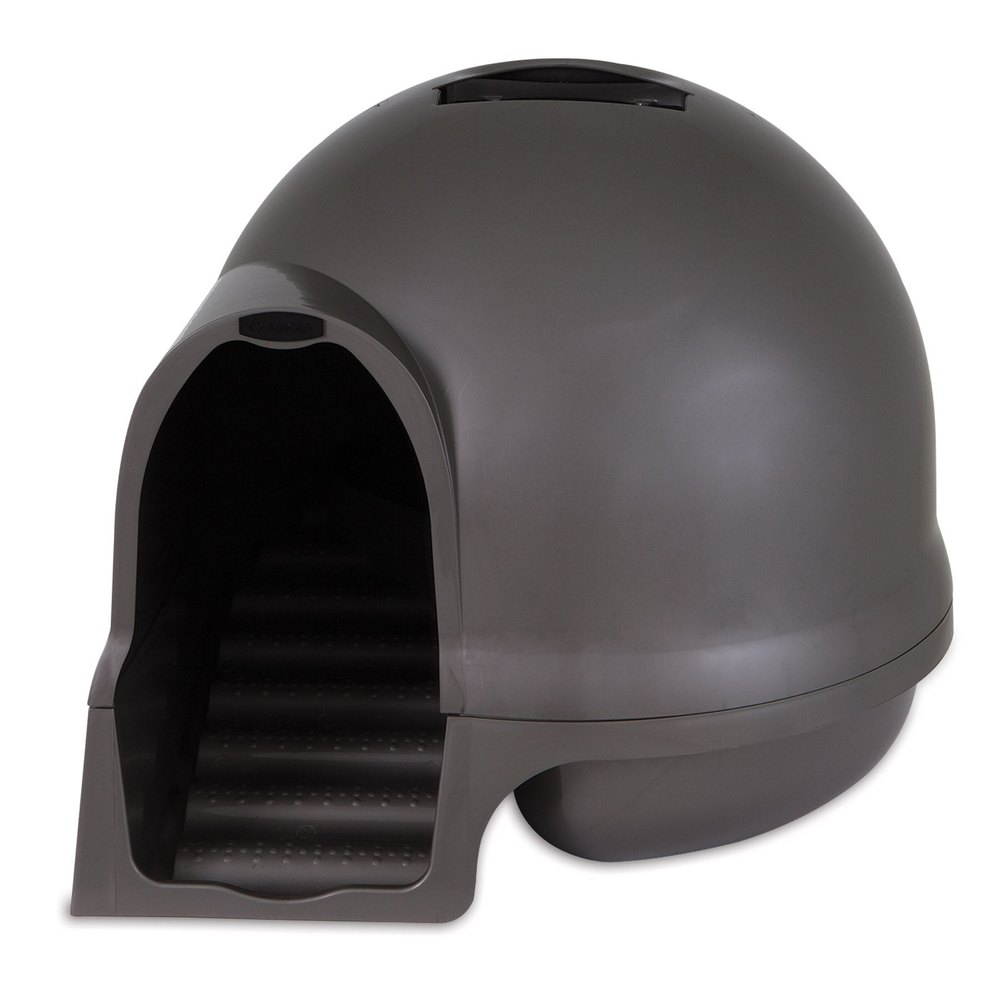
Petmate Booda Cleanstep Litter Dome
Best for: Cats who track litter and owners with floor space
Petmate calls this dome 50% larger than an average cat box. A ramp is meant to contain scatter, and a charcoal filter reduces odors. It has a handle for moving and cleaning. Skip it if floor space is tight. It measures about 22.5 by 22.5 by 19 inches, and the page gives no cat weight guidance.
- Pro: Ramp designed to contain litter scatter
- Pro: Replaceable charcoal filter to reduce odors
- Pro: Built-in handle for moving and cleaning
- Con: Large, at about 22.5 by 22.5 by 19 inches
- Con: Only one size, and no cat weight guidance on the page
 Best compactPhoto: Petmate
Covered litter boxes
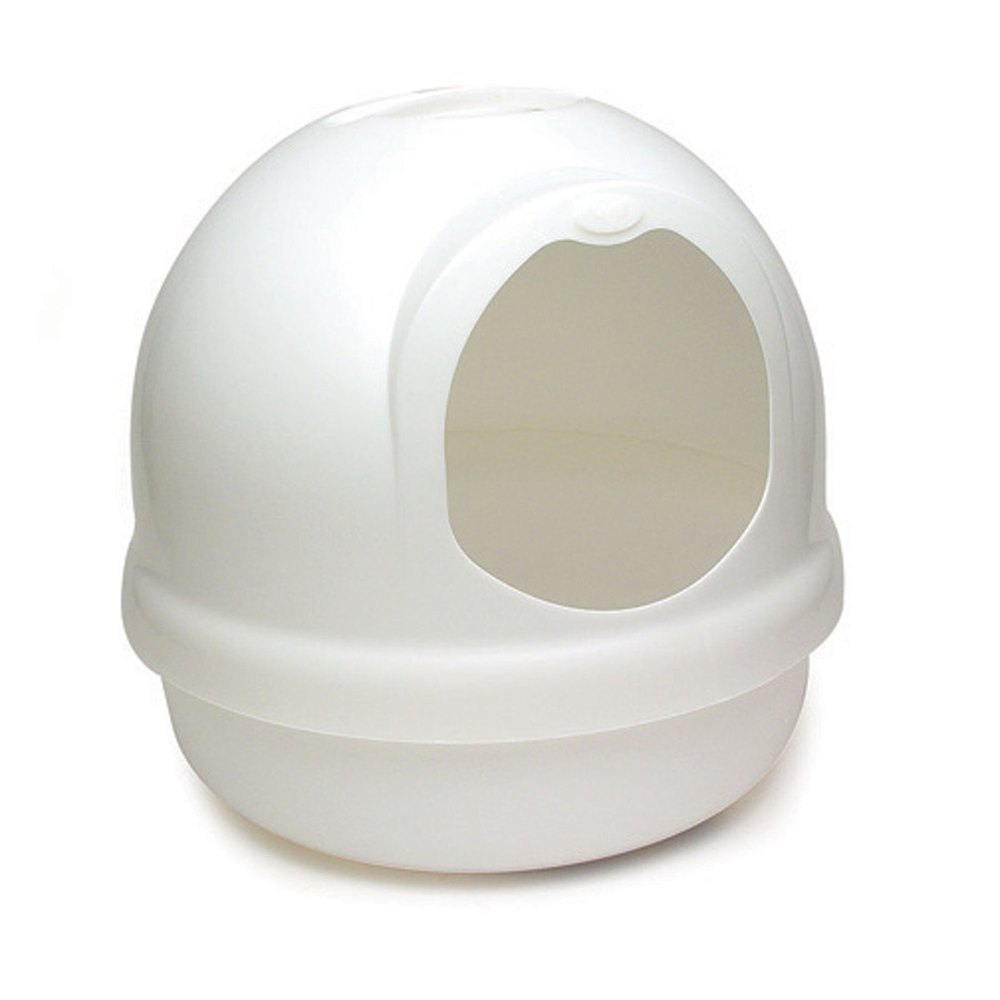
Petmate Booda Dome Litter Box
Best for: Smaller spaces and easy filter changes
This smaller dome measures about 18 by 18 by 16.5 inches. The filter slides in through the top, so swapping it is simple. It is made in the USA. Skip it if you have a large cat or want a ramp to catch litter from paws.
- Pro: Covered design that helps contain litter scatter
- Pro: Filter slides in through the top of the dome
- Pro: About 18 by 18 by 16.5 inches, smaller than the Cleanstep
- Con: No ramp or step
- Con: May be small for large cats
 Best top-entry boxPhoto: IRIS USA
Covered litter boxes
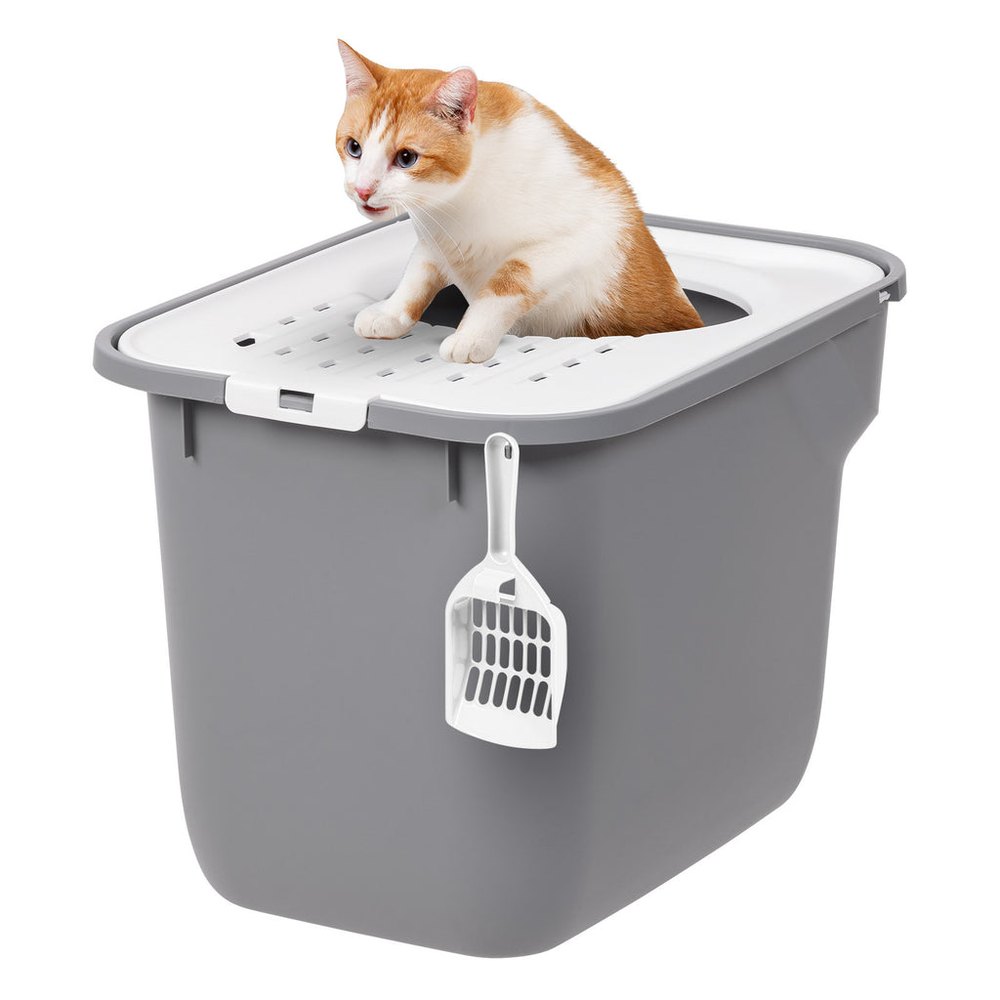
IRIS USA Top Entry Cat Litter Box with Scoop, Large
Best for: Agile adult cats who kick litter out of open boxes
Your cat jumps in through a 9.25-inch round hole on top. IRIS says the high walls and the grooved lid help keep litter inside. The lid comes off for cleaning, and a scoop with a hook is included. Skip it for kittens, older cats, or cats with sore joints, since vets say these cats need low sides.
- Pro: High walls and a grooved lid to help contain scatter
- Pro: Removable lid and included scoop with a storage hook
- Pro: 9.25-inch round entry on top
- Con: Climbing in is hard for kittens or cats with sore joints
- Con: Lid holds in smells, which many cats dislike
Covered litter boxes
Omega Paw Roll'n Clean Litterbox
Best for: Owners who want less scooping without a plug-in box
A built-in grill moves clumped waste into a pull-out tray. You roll the box over, roll it back, then empty the tray. It comes in two sizes, and the large is meant for big cats or several cats. Skip it if you need exact measurements first, because the maker’s page does not list them.
- Pro: Roll the box over and back to move waste into the tray
- Pro: Two sizes, with the large for big cats or several cats
- Pro: Simple three-step cleaning with no scooping
- Con: Maker's page lists no dimensions or cat weight limits
- Con: Still needs you to roll it and empty the tray
How to choose a covered litter box
Ask first if your cat will use a lid
Cornell says covers help people with odor and stray litter, but they can trap smells for cats. It says most cats prefer an uncovered box with a full view around them. The ASPCA goes further and says to avoid covered boxes. Studies of every cat do not exist, so your cat’s behavior is the best guide. Buy one and keep your old box nearby for a while. Petmate suggests the same short transition.
Pick a size your cat fits in
Cornell says large and overweight cats need bigger boxes. Check the outside size and the door opening before you buy. Not every maker lists a weight limit, so measure your cat and the opening.
Think about entry height
Cornell and the ASPCA say kittens, older cats and cats with joint problems need low sides. A top-entry box is the opposite of that. A front door with a low step is easier for these cats.
Look at the filter and cleaning
A filter reduces smell for you, but it does not replace scooping. Check how the filter is replaced and how often. Pick a lid that comes off or opens wide so you can scoop and wash the box.
Count your boxes and place them well
Both sources say to have one box per cat, plus one extra. Put them in quiet, easy-to-reach spots away from food and water. The ASPCA says cats like a spot where they can see people or pets coming and have more than one way out. A hood limits that view, so place a covered box in a calm area.
Safety tips
- Watch how your cat uses it. If your cat starts going outside the box, take the lid off or go back to an open box.
- Scoop every day. The ASPCA says to scoop at least once a day, and Cornell says to change litter often enough that it looks and smells clean.
- Wash weekly. The ASPCA says to wash the box with warm water and unscented soap or baking soda once a week, and to avoid scented cleaners.
- Replace worn boxes. Cornell says to replace boxes that are cracked or smell bad.
- See your vet about changes. Cornell says a cat with ongoing litter box trouble should be examined, because medical problems are a common cause.
Looking for a hands-off box instead? See our guide to the best self-cleaning litter boxes, and keep floors tidy with the best cat litter mats.
Common questions
Do cats like covered litter boxes?
Many do not. The ASPCA says most cats dislike lids, and Cornell says most cats prefer an uncovered box. If your cat avoids a covered box, take the lid off.
Do covered litter boxes control odor?
Covers can help people with odor, but Cornell says they can trap smells inside the box, which bothers cats. Scooping every day matters more than the lid.
How often should I clean a covered litter box?
The ASPCA says to scoop at least once a day. Once a week, wash the box with warm water and unscented soap or baking soda, then replace all the litter.
How many litter boxes do I need?
Both the ASPCA and Cornell say to have one box for each cat, plus one extra. You can make one of them covered and keep another open.