Dogs · Product picks
The Best Dog Brushes and De-shedding Tools
The FURminator Undercoat deShedding Tool is our top pick. See five researched dog brushes and rakes, plus which tool suits each coat type.
We may earn a commission if you buy through links on this page. It never decides what we pick.How that works
The best dog brush depends on your dog’s coat. For heavy shedders with an undercoat, our top pick is the FURminator Undercoat deShedding Tool. For short coats, tangles, or finishing, there are simpler options below, and we explain which tool fits which coat.
Our picks at a glance
- Best overall: FURminator Undercoat deShedding Tool Large Dog Short Hair
- Best slicker brush: JW Gripsoft Self-Cleaning Slicker Brush
- Best pin and bristle brush: Aspen Pet Furbuster Dog Pin/Bristle Brush
- Best for bath time and short coats: KONG ZoomGroom
- Best undercoat rake for fine coats: Andis Fine-Tooth Deshedding Rake
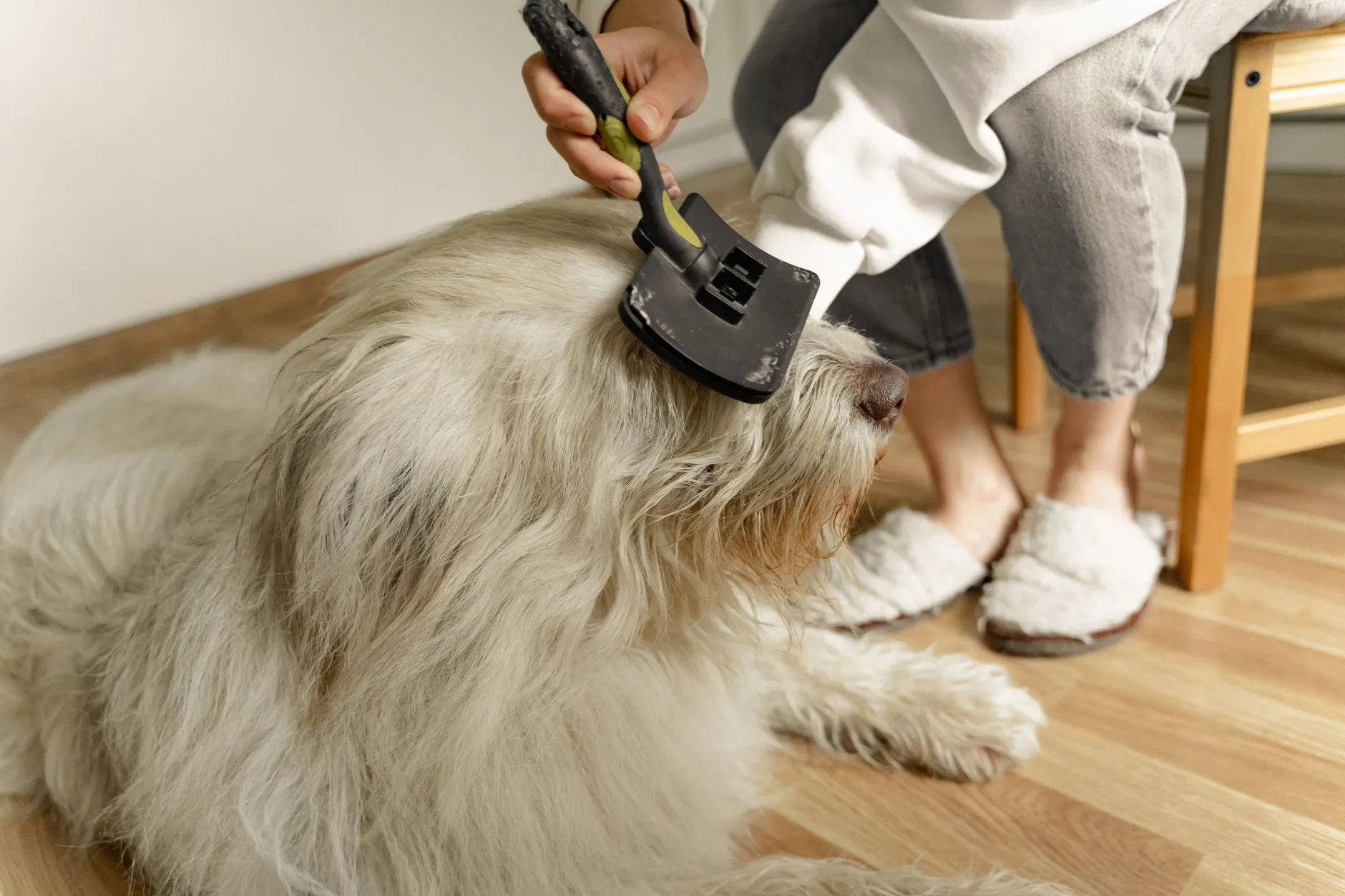
The best dog brushes and de-shedding tools
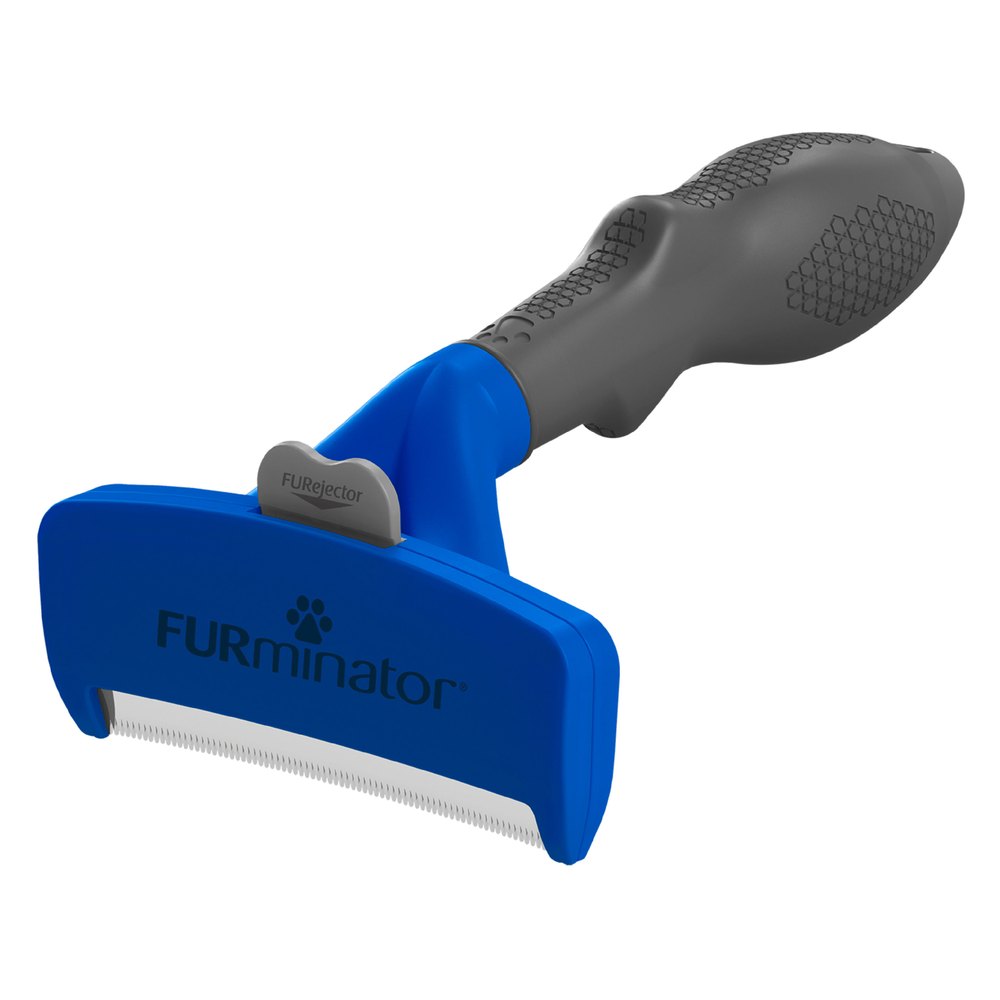 Best overallPhoto: FURminator
Dog brushes and de-shedding tools
FURminator Undercoat deShedding Tool Large Dog Short Hair
Best for: Heavy shedders with an undercoat
FURminator says its stainless steel edge reaches through the topcoat to remove loose hair and undercoat. This version is for dogs over 50 pounds, and the maker sells other sizes. It suggests using it once or twice a week for 10 to 20 minutes. Skip it if your dog has matted fur, since mats can bend or break the teeth. The maker also says not to use it on non-shedding breeds or dogs with sensitive skin.
- Pro: Stainless steel edge reaches through the topcoat to remove loose hair and undercoat
- Pro: Curved skin guard and a button that releases collected hair
- Pro: Maker sells other sizes and coat lengths
- Con: Not for matted fur, because mats can bend or break the teeth
- Con: The maker says not to use it on non-shedding breeds or dogs with sensitive skin
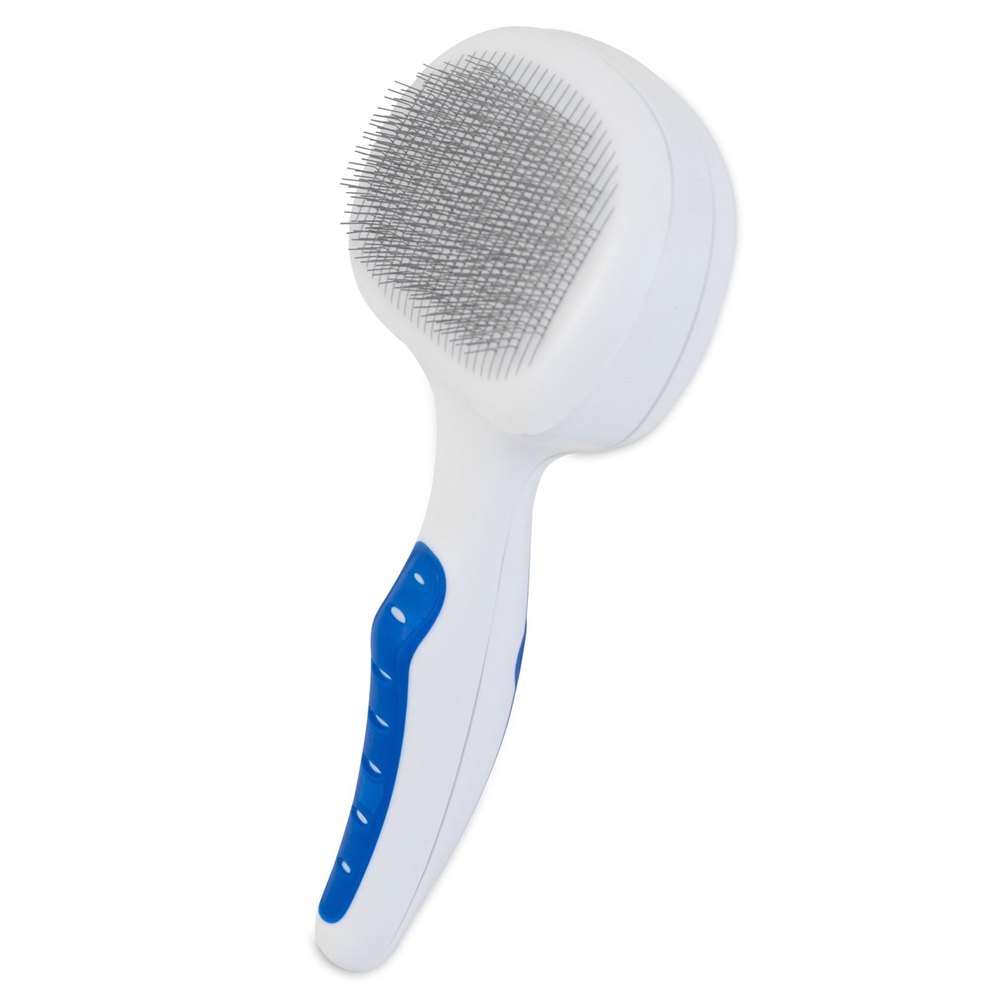 Best slicker brushPhoto: JW Pet
Dog brushes and de-shedding tools
JW Gripsoft Self-Cleaning Slicker Brush
Best for: Medium to long coats and quick cleanup
The pins retract when you press a button, so the hair slides off. Petmate says it is for loose and shedding hair on all breeds and coat types. It comes in small and large sizes. Skip it if your dog has a thick double coat and you want to reach deep into the undercoat. Use light strokes, because slicker pins sit close to the skin.
- Pro: Pins retract at the push of a button to clear hair
- Pro: Ribbed design helps keep the pins from bending
- Pro: Comes in small and large sizes
- Con: Slicker pins need a light touch near the skin
- Con: Not a true undercoat rake for thick double coats
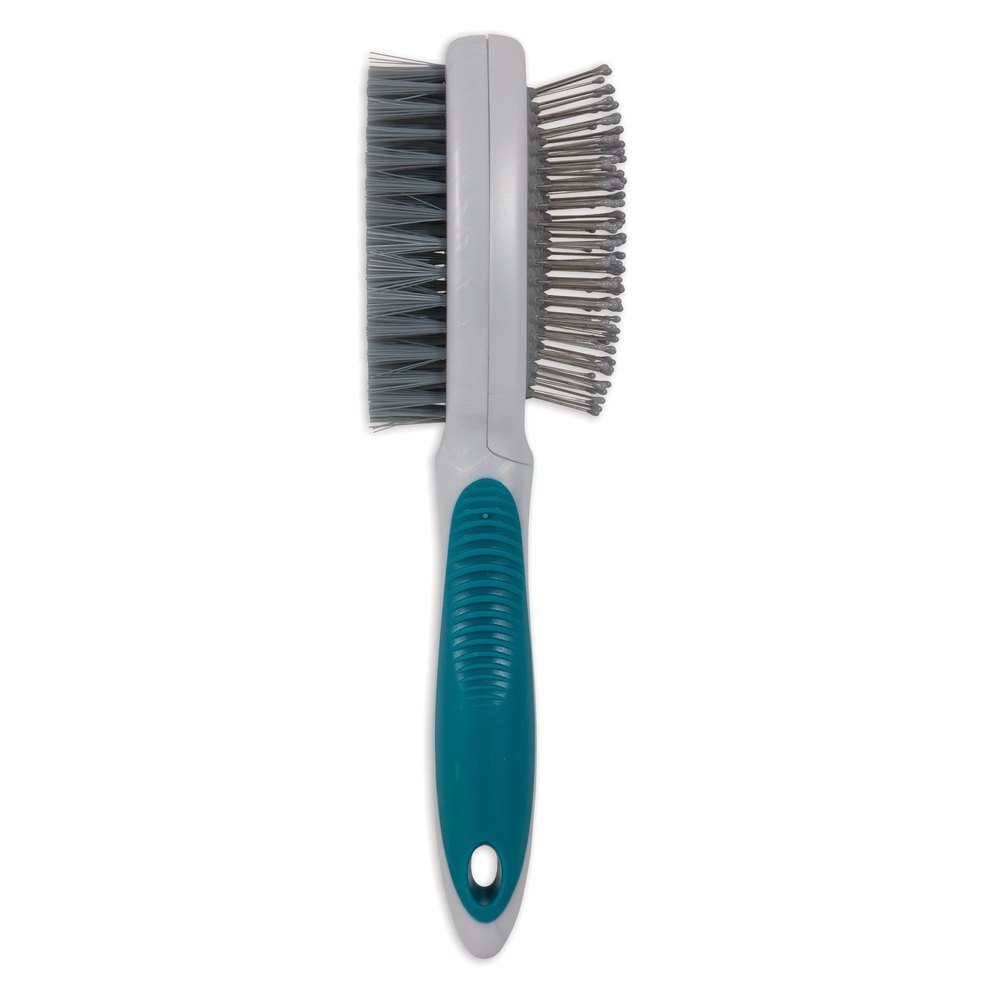 Best pin and bristle brushPhoto: Aspen Pet
Dog brushes and de-shedding tools
Aspen Pet Furbuster Dog Pin/Bristle Brush
Best for: Everyday brushing and finishing
One side has pins that work through snarls and pull out loose hair. The other side has bristles that spread natural oils and add shine. The page says it suits curly, wiry, short, medium and long coats. It comes in one size only. Skip it if you need to thin out a heavy undercoat.
- Pro: Pins on one side, bristles on the other
- Pro: Soft, non-slip rubber handle
- Pro: The maker says it suits short, medium and long coats, plus curly and wiry hair
- Con: Only one size
- Con: Pins alone won't pull out a thick undercoat
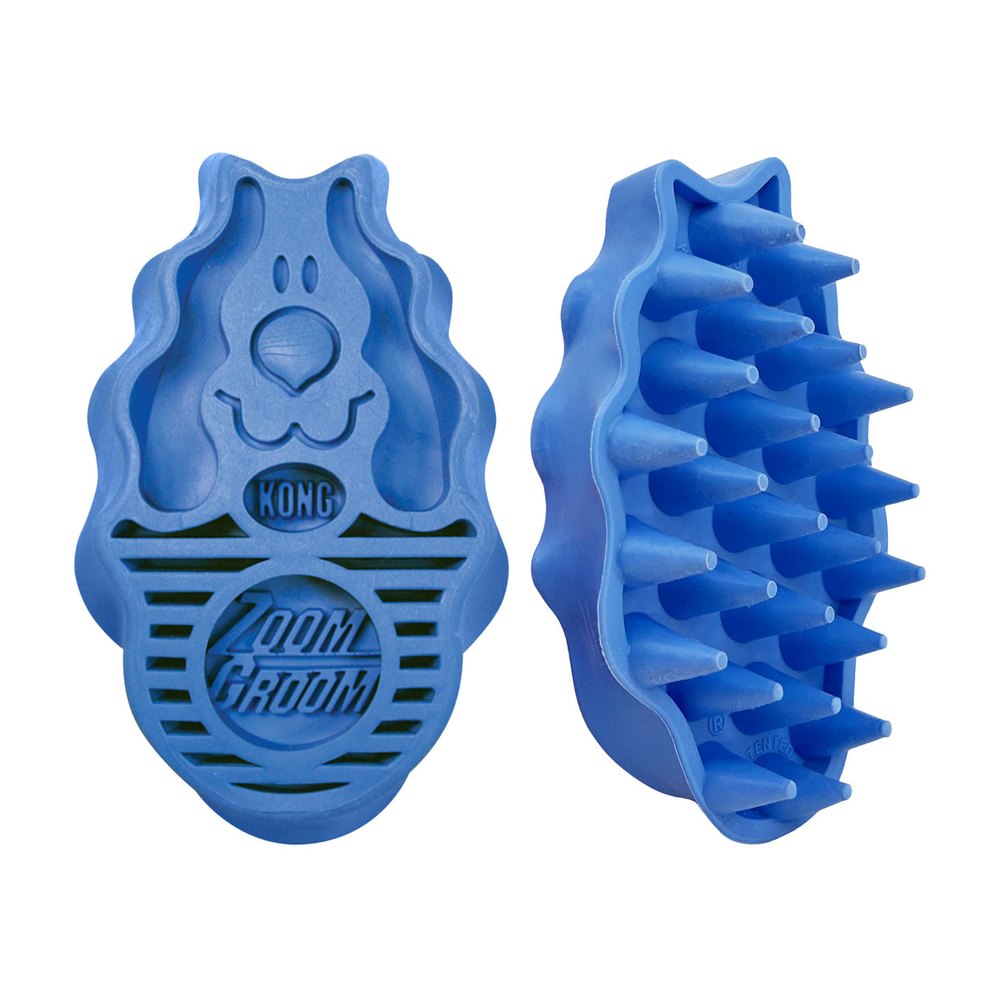 Best for bath time and short coatsPhoto: KONG
Dog brushes and de-shedding tools
KONG ZoomGroom
Best for: Short coats and bath time
This rubber brush has 3/4-inch fingers made of 100% TPE. You brush in gentle circles, either dry or with shampoo in the bath. The size on KONG’s page is for dogs between 30 and 65 pounds. Skip it for long or tangled coats. The AKC says rubber brushes suit short coats because they can’t get through long or thick fur.
- Pro: Made of 100% TPE rubber with 3/4-inch fingers that massage the skin
- Pro: Works dry or with shampoo in the bath
- Pro: Gentle, simple to hold
- Con: The size on this page is for dogs 30 to 65 pounds
- Con: Rubber won't work out tangles or mats
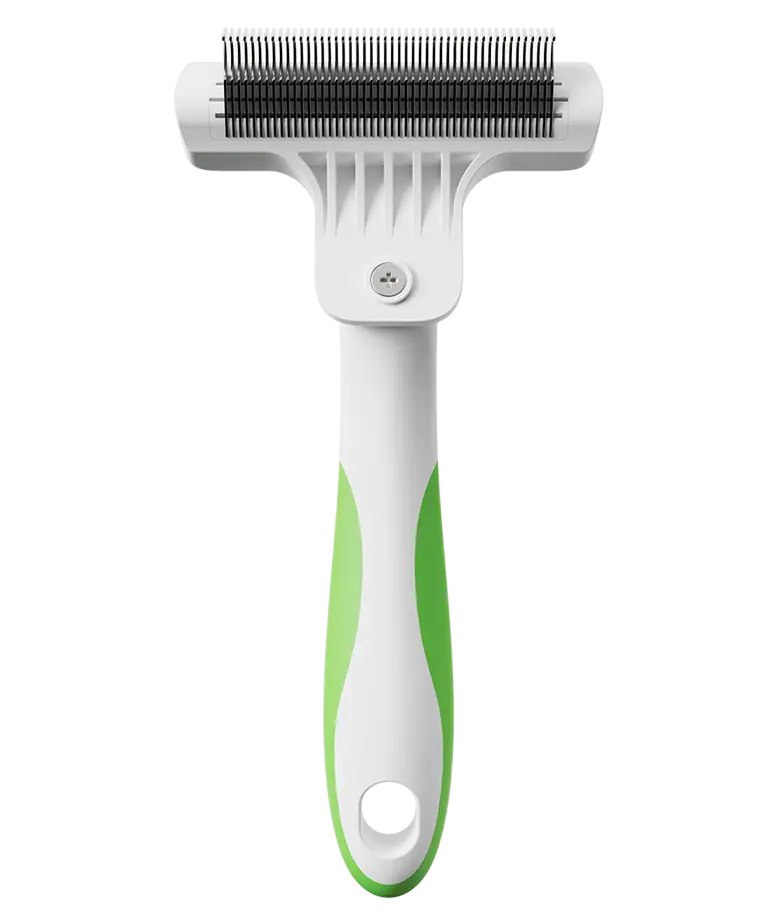 Best undercoat rake for fine coatsPhoto: Andis
Dog brushes and de-shedding tools
Andis Fine-Tooth Deshedding Rake
Best for: Finer coats and small areas
Andis says the closely spaced teeth go after loose undercoat and leave the topcoat alone. It is small, at about 6 inches long, so it is handy for detailed areas. Andis lists it for finer coats. Skip it if your dog has a very thick, dense double coat, where you may want a larger tool.
- Pro: Closely spaced teeth for loose undercoat
- Pro: Maker says it is topcoat-friendly
- Pro: Compact at about 6 inches long
- Con: Made for finer coats, so it may not suit very thick double coats
- Con: The maker's page gives no size or coat chart
How to choose a dog brush
Match the brush to the coat
The AKC and Petmate describe these tools this way:
- Slicker brush: short, fine pins on a flat head. Best for medium, long, wire and curly coats. It removes loose hair and helps remove and prevent mats.
- Pin brush: like a human hairbrush. Best for long coats, as a finishing brush to smooth hair. Petmate says groomers often use one last, to fluff the coat.
- Bristle brush: best for short coats. It removes loose hair and dander. On double coats, the AKC says it works well as a finishing brush.
- Undercoat rake: long, widely spaced pins. Best for double coats of any length. Pick a pin length that matches your dog’s coat length.
- Rubber brush or glove: best for short coats. It massages the skin and lifts loose hair.
- Wide-toothed comb: the AKC says it can help with mats and tangles.
For a double coat, you may need two tools. A rake or de-shedding tool handles the undercoat, and a bristle or pin brush finishes the topcoat.
What about a de-shedding tool?
A de-shedding tool, like the FURminator, uses a fine metal edge to pull out loose undercoat. It is meant for dogs that shed and have an undercoat. FURminator says not to use it on non-shedding breeds. The AKC article we read doesn’t cover this tool type, so follow the maker’s directions.
Check size and comfort
Pick a brush sized for your dog. Some tools come in several sizes, like the FURminator, which is sold by dog weight and coat length. Rubber-tipped pins can help avoid scratching the skin, says the AKC. Choose a handle that feels secure and comfortable in your hand.
How often to brush
Petmate says vets suggest brushing every few days, or at least once a week. Brushing every couple of days also helps stop mats from forming. During heavy shedding seasons, FURminator says you may need to use its tool more often.
Safety tips
- Check the skin first. FURminator says to look for sores, bruises and skin problems before using its tool. If you find any, see your vet before brushing.
- Use a light touch. The AKC says pressing hard with a slicker can hurt your dog. FURminator says deep or rough brushing can irritate skin, and to stop if you see redness.
- Take extra care in sensitive spots. FURminator says to go gently near the stomach, legs, genitals and rear end.
- Take out mats first. FURminator says to remove tangles before using its tool. Petmate says to start at the edge of a mat and not pull hard. If a mat won’t loosen, ask a groomer or your vet. Scissors can cut skin.
- Keep sessions calm. Petmate suggests a quiet, comfortable spot and a steady schedule so your dog knows what to expect.
- Clean the tool. FURminator says you can wash its edge with warm water and mild soap, and dry it fully before storing.
Brushing pairs well with bath time. See our guide to the best dog shampoos, and keep nails short with the best dog nail clippers.
Common questions
How often should I brush my dog?
Petmate says vets suggest brushing every few days, or at least once a week. Regular brushing also spreads natural oils through the coat and cuts down on loose fur around the house.
What is the best brush for a short-haired dog?
The AKC says a bristle brush suits short coats. A soft rubber brush, like the KONG ZoomGroom, is another option, because its flexible fingers lift loose hair from short fur and can be used wet.
Is a slicker brush or an undercoat rake better for a double coat?
They do different jobs. The AKC says an undercoat rake reaches the undercoat of double-coated dogs of any coat length, while a slicker suits medium, long, wire and curly coats. Match the pin length to your dog’s coat.
What should I do about mats in my dog’s fur?
Petmate says to work from the outer edge of a mat toward the center, a little at a time, and not to pull hard on tangles. If a mat won’t loosen, ask a groomer or your vet for help.