Dogs · Guide
Can Dogs Eat Honeydew Melon?
Yes, dogs can eat a little honeydew melon flesh. Remove the rind and seeds first. Here is how to serve it, how much sugar to think about, and the signs of upset.
Yes, dogs can eat honeydew melon. The ASPCA lists it as non-toxic to dogs. Give only a few small pieces of the soft flesh. Cut away the rind and seeds first, because they can upset your dog’s stomach or get stuck in the gut.
Is honeydew melon safe for dogs?
The flesh is. The ASPCA lists honeydew melon (Cucumis melo) as non-toxic to dogs, and it names no toxic part of the fruit.
That does not mean every part is safe to eat. The trouble spots are the rind, the seeds, and the sugar. The sections below cover each one.
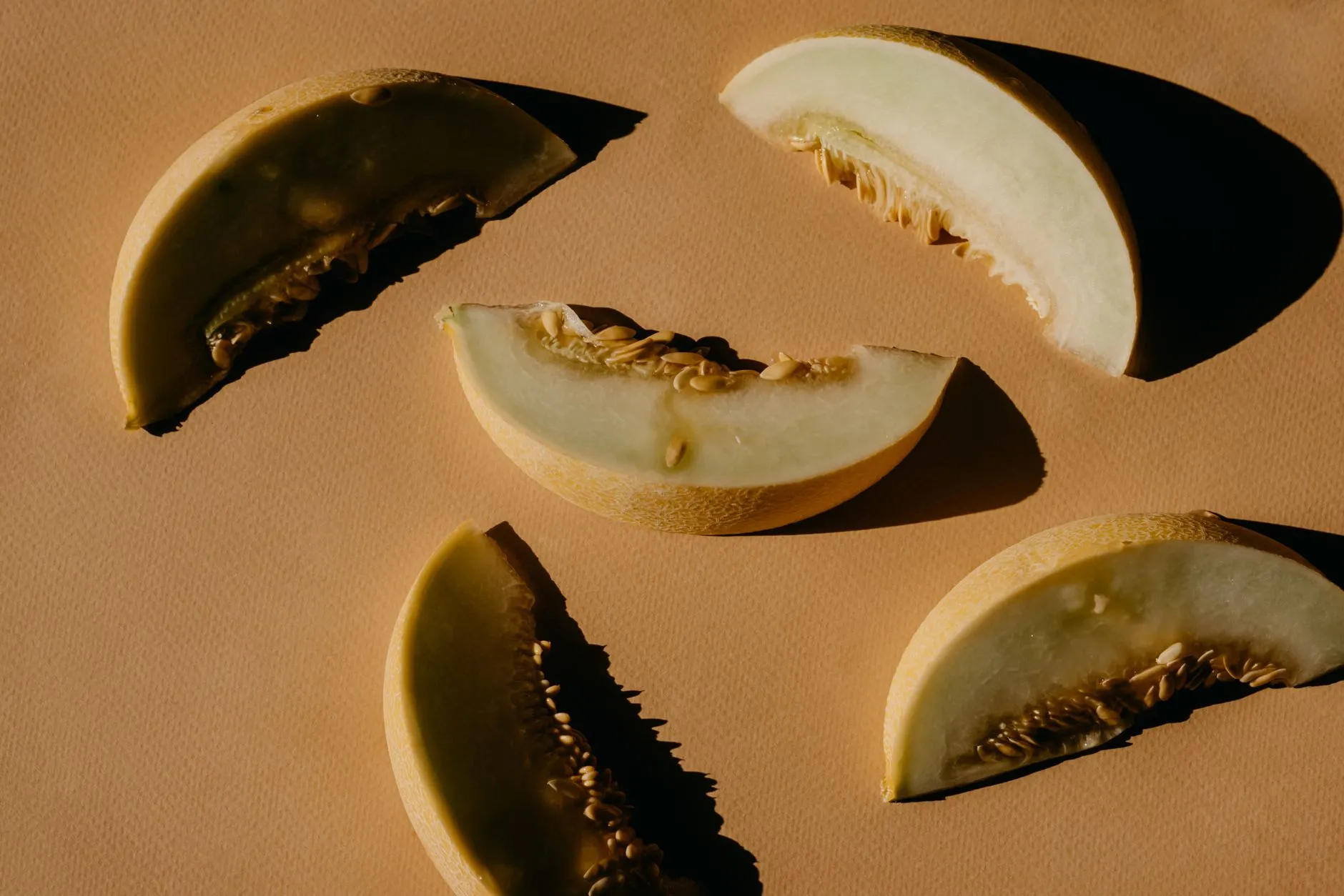
Can dogs eat honeydew rind?
No. Take the rind off before you share. I found no source that talks about honeydew rind on its own. But the AKC says watermelon rind is hard to digest. It can cause stomach upset, vomiting, diarrhea, or a blockage if a dog swallows big pieces. The AKC also says cantaloupe rind can cause stomach upset and may get stuck in a dog’s gut. Its tough skin can also be a choking risk.
Honeydew is a close relative of cantaloupe, so the same advice makes sense. Keep the rind out of reach, too. A dog that raids the trash or compost can swallow large chunks.
Can dogs eat honeydew seeds?
It is best to take them out. The AKC says the seeds in cantaloupe are not harmful if eaten. Still, it advises against feeding them on purpose, because they can cause choking. For watermelon, it says to remove all seeds. They are a choking risk, mostly for small dogs. A large number of seeds can also cause a blockage in the gut.
I found no source that gives a safe number of honeydew seeds. If your dog swallows a few by accident, watch for the signs below.
How much honeydew can a dog eat?
Only a little. None of the sources give an exact amount for honeydew. For watermelon, the AKC says a few bite-sized pieces at a time work for most dogs. The right amount depends on your dog’s size, age and activity level. It also suggests starting small the first time and watching for an upset stomach.
Melons have natural sugar. The AKC says cantaloupe is high in sugar, so it should be shared in moderation. That is especially true for dogs that are overweight or have diabetes. I found no AKC page that tests honeydew itself, so treat this as a sensible guess from a similar fruit. If your dog has diabetes or weight problems, ask your vet before sharing melon.
Like all treats, melon should stay under about 10% of your dog’s daily calories. The AKC gives this rule for watermelon, and it works for any treat.
How can I serve honeydew to my dog?
- Wash the melon and cut it open.
- Cut off all the rind, and scoop out every seed.
- Cut the flesh into small, bite-sized pieces. Smaller pieces are safer for small dogs.
- Give a few pieces. Do not give a whole slice.
- Store the rest in the fridge, and keep the rind and seeds in a bin your dog can’t open.
The AKC suggests frozen chunks of seedless watermelon as a cool treat. Frozen honeydew pieces may work the same way, but I found no source that says so. Skip any fruit that has been canned in syrup. The AKC says to avoid canned fruit in syrup.
What signs of trouble should I watch for?
Most dogs will be fine after a few pieces of flesh. Too much melon, or a bit of rind, can upset the gut. Watch for:
- Vomiting
- Diarrhea
- Belly pain or a tight, swollen belly
- Gagging, or not wanting to eat
- Straining to poop, or not pooping
The AKC lists vomiting, diarrhea, stomach upset and a blockage as the risks of melon rind. Call your vet if signs last or get worse. Call right away if your dog keeps vomiting, seems to be in pain, or you think it swallowed a large piece of rind or many seeds. A blockage is an emergency.
Other fruits to try instead
If your dog likes melon, there are other fruits to share. Our guide to watermelon for dogs covers a similar fruit. Our apples for dogs article covers another crunchy snack. For fruits and foods to avoid, see our list of foods that are toxic to dogs.
Common questions
Is honeydew melon toxic to dogs?
No. The ASPCA lists honeydew melon as non-toxic to dogs. The risks come from the rind and seeds, and from feeding too much.
Can dogs eat honeydew seeds?
It is best to remove them. The AKC says melon seeds can be a choking risk, and a large number of seeds can block the gut. Small dogs are at higher risk.
Can puppies eat honeydew melon?
I found no source that gives a special rule for puppies. If you want to try it, use a tiny piece of flesh with no rind or seeds, and ask your vet first.
Can dogs with diabetes eat honeydew?
Ask your vet first. The AKC says cantaloupe is high in sugar and may not suit dogs with diabetes. Honeydew is a similar melon, so the same caution makes sense.