Cats · Product picks
The Best Slow Feeder Cat Bowls
The Outward Hound Catstages Slow Feeder Bowl is our top pick. See four slow feeders for cats, plus how to choose one and use it safely.
We may earn a commission if you buy through links on this page. It never decides what we pick.How that works
A slow feeder makes your cat work a little for each bite, so meals take longer. This guide is for cats that gulp their food. Our top pick is the Outward Hound Catstages Slow Feeder Bowl, a simple bowl with 30 paw-shaped compartments. Below are four options and how to choose.
Our picks at a glance
- Best overall: Catstages Cat Slow Feeder Bowl
- Best for cats who like to paw: Catit Senses Digger
- Best for a bigger challenge: Catit Senses Food Tree
- Best for wet food: LickiMat Variety Two-Pack Cat Classics
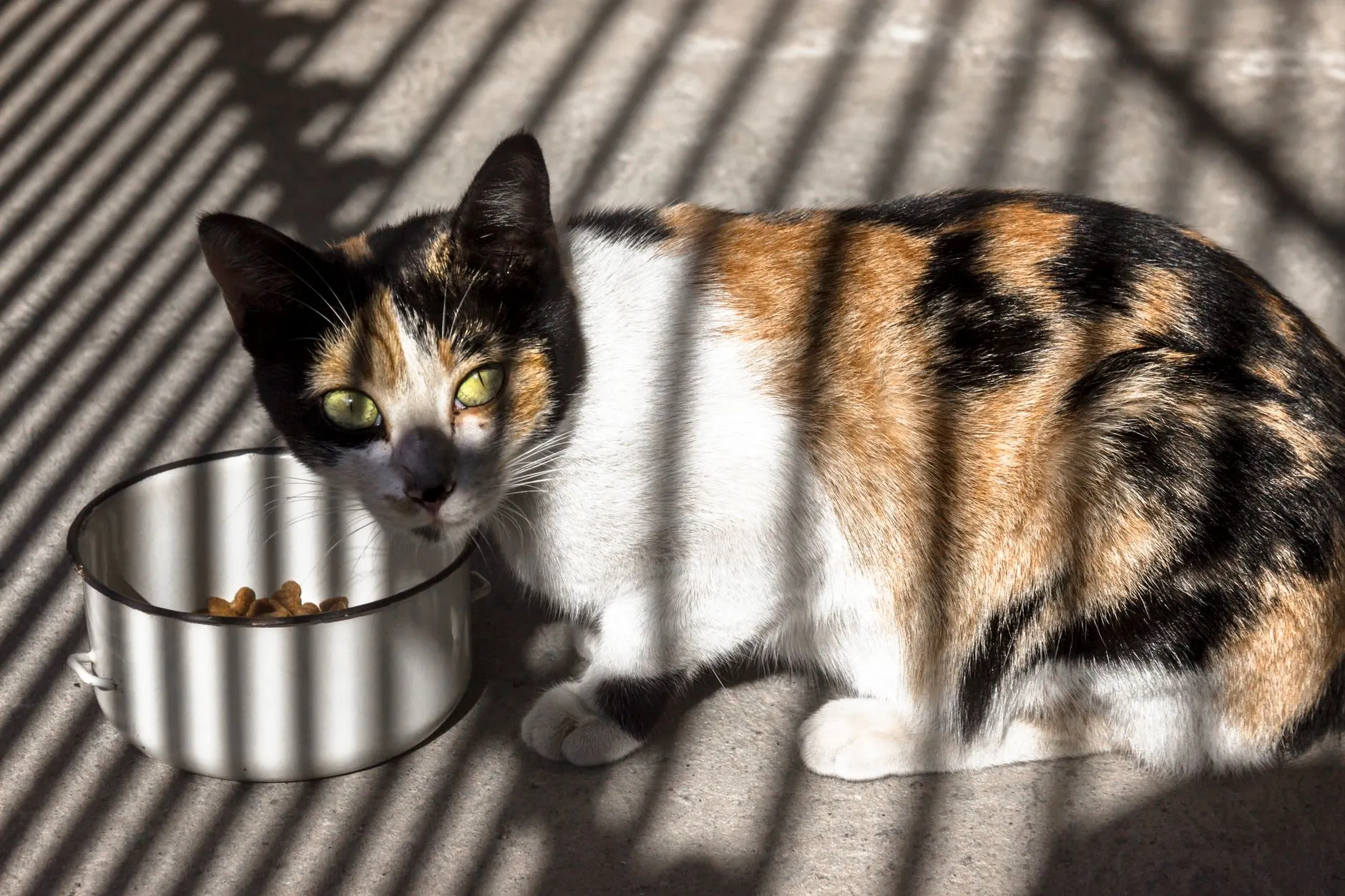
The best slow feeder cat bowls
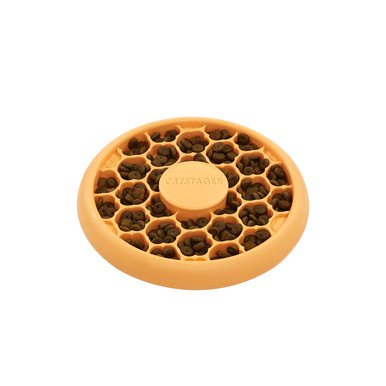 Best overallPhoto: Outward Hound
Slow feeder cat bowls
Catstages Cat Slow Feeder Bowl
Best for: Cats who gulp dry or wet food
This is the closest thing to a normal bowl on the list. It has 30 paw-shaped compartments, holds up to 1/2 cup of dry food, wet food or treats, and has a nonslip base. It goes in the top rack of the dishwasher. The maker doesn’t name the material, and a half cup is small, so skip it if your cat eats big meals.
- Pro: Holds up to 1/2 cup of dry food, wet food or treats
- Pro: Nonslip base helps keep it from sliding
- Pro: Top-rack dishwasher safe
- Con: Small capacity for big meals
- Con: The maker doesn't say what the bowl is made of
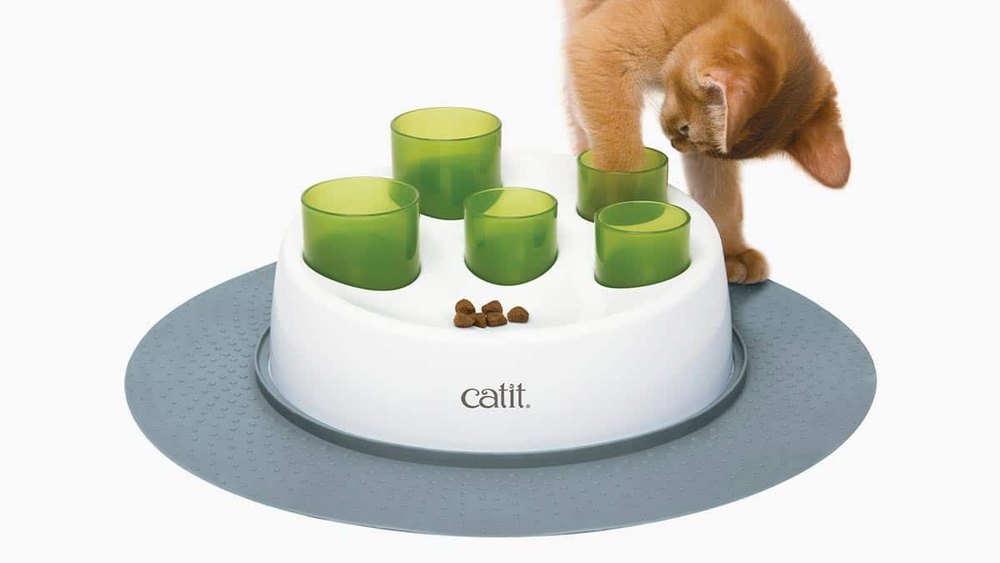 Best for cats who like to pawPhoto: Catit
Slow feeder cat bowls
Catit Senses Digger
Best for: Dry food and playful cats
Your cat digs food out of five cups, three short and narrow and two long and wide. The cups have rounded edges, and the sloped base slides stray food to a front basin. It is about 14.6 by 14.6 inches, so it needs floor space. Skip it if you want a compact bowl.
- Pro: Five cups with rounded edges for paws
- Pro: Sloped base slides stray food to a front basin
- Pro: Parts come apart for cleaning
- Con: Takes up more room than a bowl (about 14.6 x 14.6 inches)
- Con: The maker only says it is made of BPA-free materials
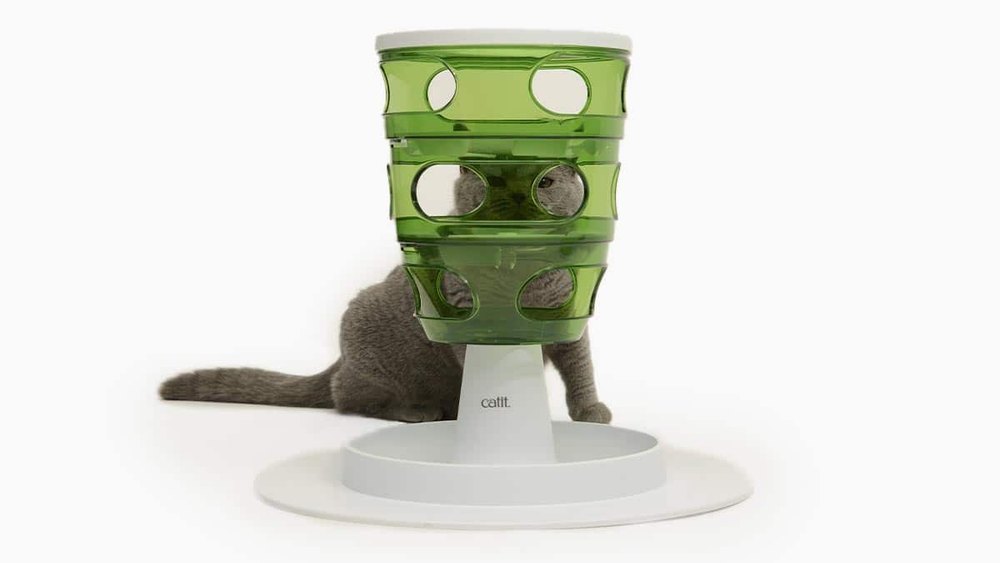 Best for a bigger challengePhoto: Catit
Slow feeder cat bowls
Catit Senses Food Tree
Best for: Active cats who need a mealtime puzzle
This tree-shaped feeder has a small top opening so your cat can’t grab a lot of food at once. An inner disc has three settings that change how much food falls through. It is large, about 14.8 by 14.8 by 13.1 inches. Skip it if your cat has never used a puzzle feeder, or start with an easier bowl first.
- Pro: Three settings change the size of the openings
- Pro: Wide base and a tray that catches fallen pieces
- Pro: Top cover comes off for cleaning
- Con: Large, at about 14.8 x 14.8 x 13.1 inches
- Con: Not a bowl, so your cat may need time to learn it
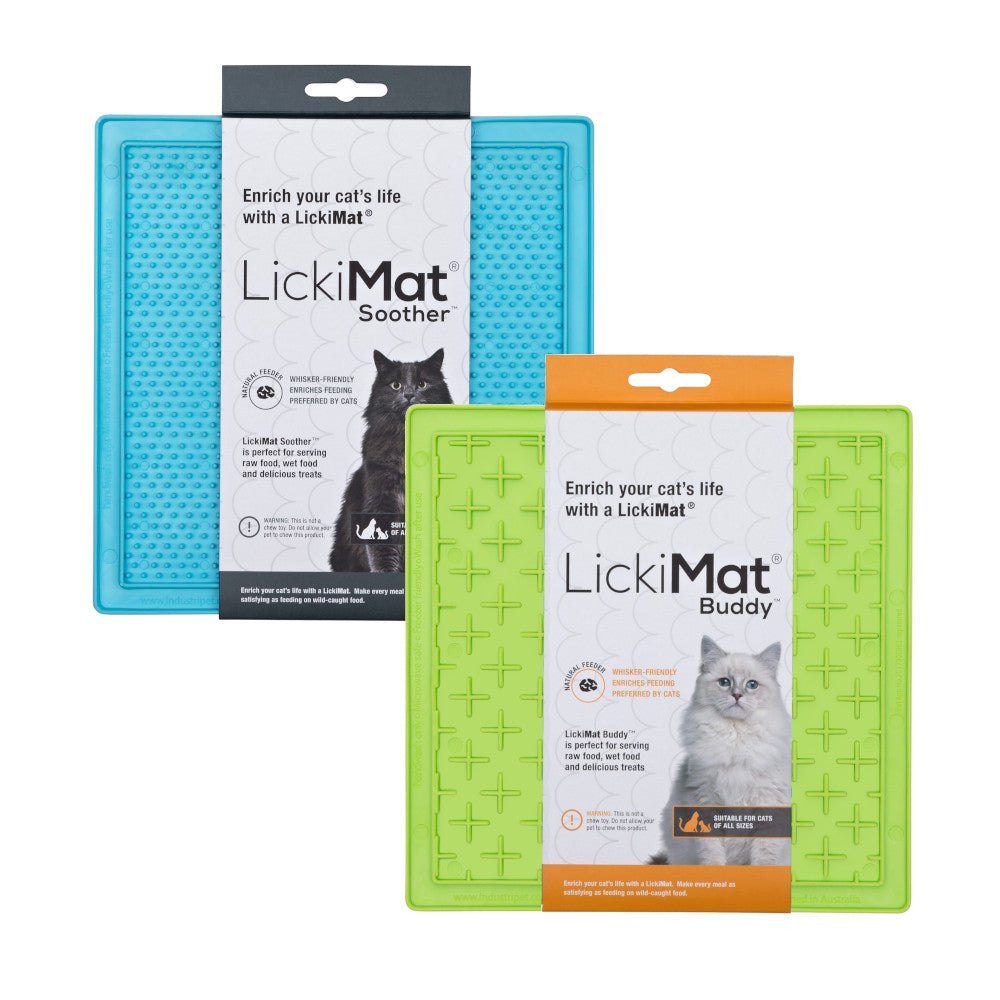 Best for wet foodPhoto: LickiMat
Slow feeder cat bowls
LickiMat Variety Two-Pack Cat Classics
Best for: Cats who eat wet, raw or soft food
This set has two 8-inch lick mats. LickiMat lists them for wet, dry, raw, freeze-dried and liquid food, and says they work as a bowl alternative or treat dispenser. They are freezer safe and hand washable. LickiMat says to supervise your cat for the first few uses. Skip them for a cat that chews everything.
- Pro: Made for wet, dry, raw, freeze-dried and liquid food
- Pro: Food-grade TPR with no BPA, PVC, silicone or phthalates
- Pro: Freezer safe and hand washable
- Con: Supervise your cat for the first few uses
- Con: Not meant for cats that chew everything (the maker suggests its Tuff line)
How to choose a slow feeder for your cat
Match it to the food
Check what the maker says the feeder can hold. Some list wet food, some are for kibble. A flat bowl or lick mat is easier for wet food than a tall feeder with openings.
Pick the right difficulty
Start easy. A feeder that frustrates your cat may end with a cat that gives up or knocks it over. Adjustable designs, like the Food Tree’s three settings, let you raise the challenge over time.
Check size and cleaning
Think about where it will sit. The two Catit feeders are much bigger than a bowl. Look for parts that come apart or a note about the dishwasher. Maker pages differ: Outward Hound says top rack only, LickiMat says hand wash.
Does your cat need one?
Cornell says leaving dry food out all the time can lead some cats to overeat and gain weight. It says feeding at set times with controlled portions can help. A slow feeder can make those meals last longer, but it won’t fix a feeding plan on its own.
Safety tips
- Watch the first meals. LickiMat advises supervising your cat for the first few uses, and it is a good habit with any new feeder.
- Throw out damaged feeders. Outward Hound says to replace its feeder if it becomes damaged.
- Use it for cats only. Outward Hound says its bowl is not a chew toy or a children’s toy.
- Keep water out. Cornell says fresh water should always be available, especially for cats eating only dry food.
- Replace food left out. Cornell says to replace any food left out each day.
- Weight loss needs your vet. Cornell says weight-loss programs should be run under veterinary direction, with gradual loss. Call your vet if your cat throws up often or loses weight.
- Feed cats apart. In multi-cat homes, Cornell says separate feeding areas may help.
For more ways to manage meals, see our guide to the best automatic cat feeders and the foods toxic to cats.
Common questions
Do slow feeders count as a cat bowl?
They can replace a regular bowl for many cats. Keep fresh water out as well, because Cornell says water should always be available, especially for cats that eat dry food.
Can a slow feeder help an overweight cat?
It can add some effort to mealtime, but it does not replace a diet plan. Cornell says weight-loss programs should be run under a veterinarian's direction.
Should I leave food in a slow feeder all day?
Cornell says leaving food out all the time may suit some cats but can lead others to overeat. It also says to replace food left out each day.
Can I use a slow feeder for wet food?
Some can. The Outward Hound bowl lists wet food, and LickiMat lists wet, raw and liquid food. The Catit feeders are described for kibble, so check the maker's page first.